Technical
How to Find Federal Contracting Opportunities Before Your Competition
Every small business chasing federal contracts faces the same problem: by the time an opportunity posts on SAM.gov, you're already behind.
The incumbent has been meeting with the program office for months. Primes have already locked in their teaming partners. The RFP drops with a 14-day response window, and you're scrambling to understand requirements that others helped shape.
There's a better way. The most successful government contractors don't wait for opportunities to come to them. They find federal contracts early—often 12-18 months before the competition even knows the work exists.
Here's how to do it.
Every small business chasing federal contracts faces the same problem: by the time an opportunity posts on SAM.gov, you're already behind.
The incumbent has been meeting with the program office for months. Primes have already locked in their teaming partners. The RFP drops with a 14-day response window, and you're scrambling to understand requirements that others helped shape.
There's a better way. The most successful government contractors don't wait for opportunities to come to them. They find federal contracts early—often 12-18 months before the competition even knows the work exists.
Here's how to do it.

Why Early Awareness Wins Contracts
Federal procurement doesn't happen overnight. From the moment an agency identifies a need to the day they award a contract, the process can take 12-24 months. During that time:
Requirements get defined
Market research happens
Industry days are scheduled
Draft solicitations are released
Relationships are built
Contractors who engage early influence this process. They attend industry days, respond to RFIs, meet with contracting officers, and position themselves as the obvious choice. By the time the RFP posts, they've already won—the proposal is just a formality.
If you're first learning about an opportunity when it hits SAM.gov, you're competing against people who started a year ago.
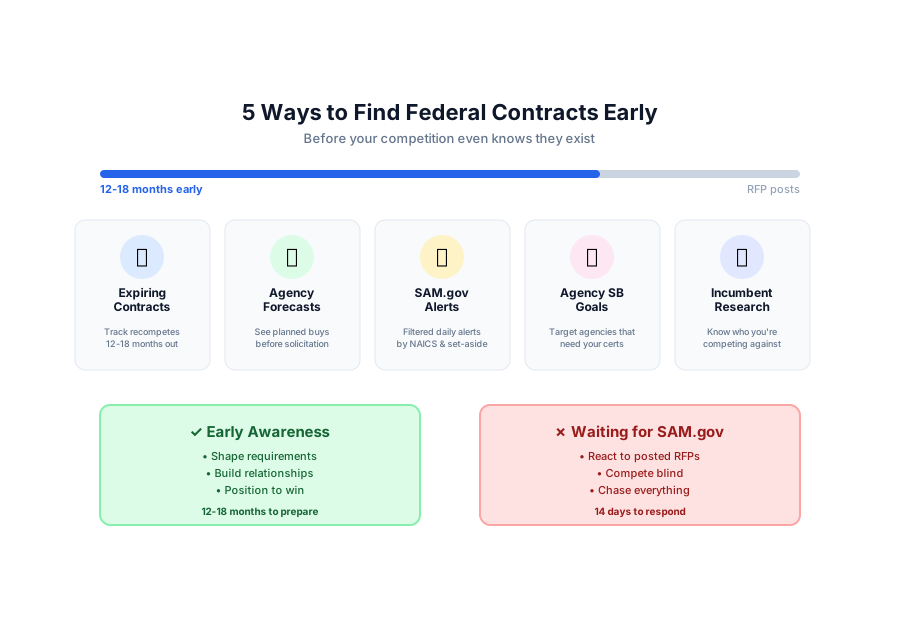
The 5 Best Ways to Find Federal Contract Opportunities
1. Track Expiring Contracts (Recompetes)
This is the most underused strategy in government contracting.
Every federal contract has an end date. When that contract expires, the government must decide: extend it, re-award it to the incumbent, or compete it again. That third option—the recompete—is your opportunity.
Recompetes are predictable. The end dates are public. You can identify them 12-18 months in advance and start positioning while your competitors are still refreshing SAM.gov.
What to look for:
Contracts in your NAICS codes expiring in the next 6-18 months
Contracts with incumbents who may be vulnerable (performance issues, lost certifications, pricing too high)
Contracts where the set-aside matches your certifications
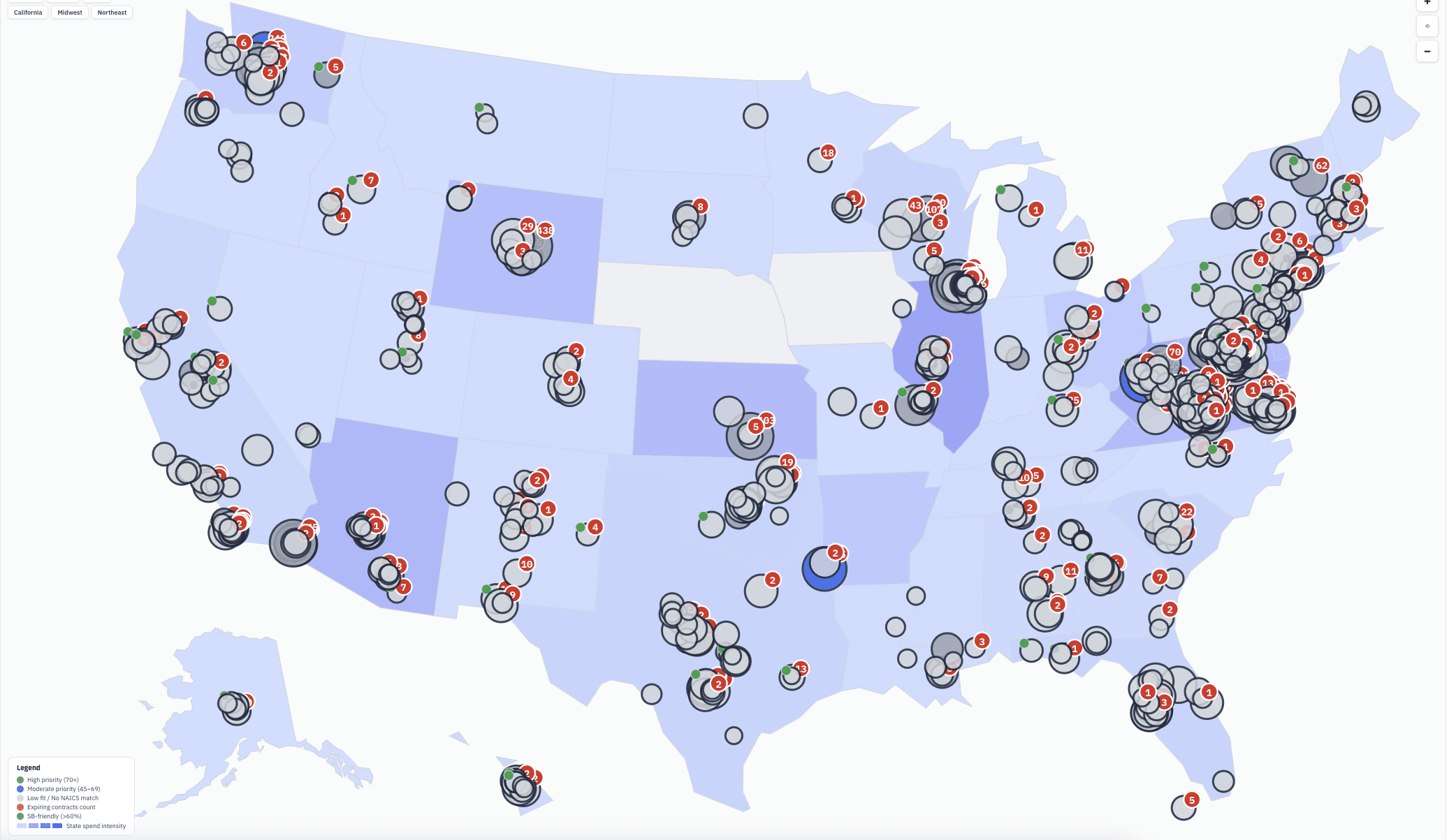
FedProposal's Expiring Contracts Dashboard lets you search thousands of federal contracts by NAICS, agency, set-aside type, and end date. Find recompete opportunities before they hit the street.
2. Monitor Agency Acquisition Forecasts
Many federal agencies publish annual procurement forecasts listing planned acquisitions for the coming fiscal year. These forecasts tell you:
What the agency plans to buy
Estimated contract values
Anticipated award timeframes
Set-aside intentions
Points of contact
Forecasts aren't perfect—plans change, budgets shift, priorities evolve. But they're one of the earliest signals that work is coming.
The challenge? Every agency publishes forecasts differently. Some use spreadsheets, some use PDFs, some bury them deep in their websites. Finding and consolidating them takes hours.
FedProposal's Agency Forecasts page aggregates forecasts from 26 federal agencies into one searchable interface. Filter by agency, NAICS, and fiscal year to find upcoming opportunities in your space.
3. Set Up Filtered SAM.gov Alerts
SAM.gov is the official source for federal contract opportunities. Every RFP, RFI, Sources Sought, and award notice posts there.
The problem? SAM.gov's search and alert system is clunky. Saved searches return too many irrelevant results. Email alerts lack detail. You waste time clicking through opportunities that don't match your capabilities.
A smarter approach:
Filter alerts by your specific NAICS codes
Filter by notice type (Sources Sought and Pre-Solicitation are early indicators)
Filter by set-aside if you have certifications
Get alerts with actual details, not just links
FedProposal's Daily SAM Alerts deliver filtered opportunities to your inbox every night at 10 PM. See what matters, skip what doesn't.
4. Target Agencies That Need Your Certifications
If you're an 8(a), SDVOSB, HUBZone, or WOSB contractor, your certification is a competitive weapon—but only if you target the right agencies.
Every federal agency has small business contracting goals set by the SBA. Agencies that fall short face pressure to find qualified small businesses fast. If you're SDVOSB-certified and an agency is behind on their veteran-owned goals, your certification just became an advantage.
Most contractors don't track this data. They should.
FedProposal's Agency Small Business Performance data shows how each agency performs against their SBA goals. Stop guessing. Start targeting agencies that need contractors like you.
Learn more about how set-aside programs work and how to leverage your certifications.
5. Research Incumbents and Contract History
Before you pursue an opportunity, you need intelligence:
Who holds the current contract?
What are they being paid?
How long have they had the work?
Are there signs of performance problems?
Has the contract been competed before, or sole-sourced?
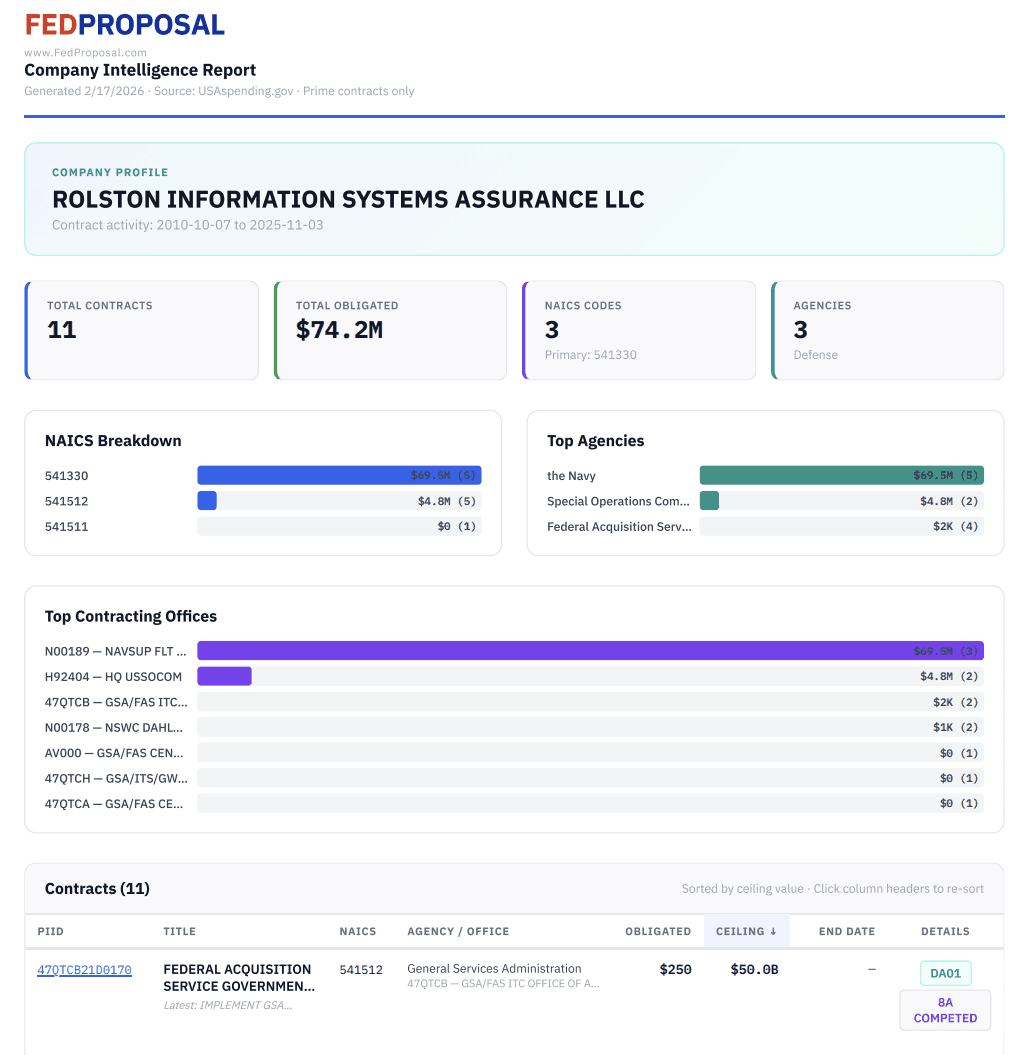
This information is public, but scattered across FPDS, USAspending, and agency databases. Pulling it together manually takes hours per opportunity.
FedProposal consolidates this data. When you find an expiring contract, you can see the incumbent, pricing history, contract lineage, and competitive landscape—all in one place.
Where NOT to Spend Your Time
Not all opportunity sources are worth your effort:
Third-party bid boards — Most just scrape SAM.gov and charge you for data that's free. They add no intelligence.
Waiting for RFPs — If your entire pipeline is posted opportunities, you're always playing catch-up.
Chasing everything — Responding to every opportunity that matches your NAICS is a recipe for burnout and low win rates. Focus on opportunities where you have a real advantage.
Build a Pipeline, Not a Reaction Machine
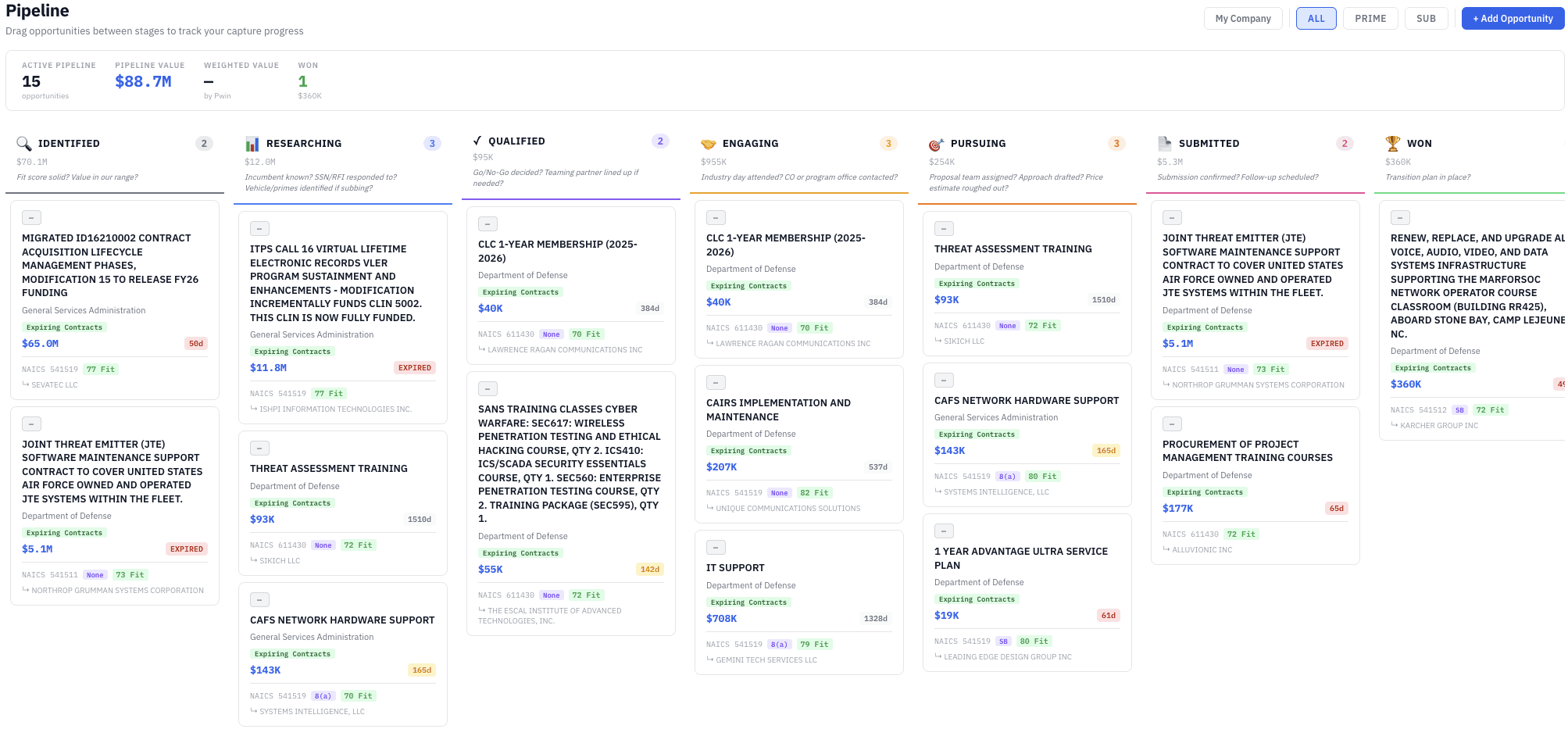
The best government contractors don't chase opportunities—they build pipelines.
A healthy pipeline includes:
Long-term targets (12-18 months out): Expiring contracts and forecast opportunities you're tracking and positioning for
Mid-term targets (6-12 months out): Opportunities where you've responded to RFIs, attended industry days, or made contact with the contracting office
Near-term targets (0-6 months): Active solicitations you're preparing to bid
If your pipeline only has near-term opportunities, you'll always be scrambling. If you build long-term awareness, you can be selective and strategic.
Start Finding Opportunities Today
Federal contract opportunities are everywhere—if you know where to look.
Stop refreshing SAM.gov hoping something good posts. Start tracking expiring contracts, monitoring agency forecasts, and targeting agencies that need your certifications.
The contractors who win aren't the ones who respond fastest. They're the ones who found the opportunity first.
Why Early Awareness Wins Contracts
Federal procurement doesn't happen overnight. From the moment an agency identifies a need to the day they award a contract, the process can take 12-24 months. During that time:
Requirements get defined
Market research happens
Industry days are scheduled
Draft solicitations are released
Relationships are built
Contractors who engage early influence this process. They attend industry days, respond to RFIs, meet with contracting officers, and position themselves as the obvious choice. By the time the RFP posts, they've already won—the proposal is just a formality.
If you're first learning about an opportunity when it hits SAM.gov, you're competing against people who started a year ago.
The 5 Best Ways to Find Federal Contract Opportunities
1. Track Expiring Contracts (Recompetes)
This is the most underused strategy in government contracting.
Every federal contract has an end date. When that contract expires, the government must decide: extend it, re-award it to the incumbent, or compete it again. That third option—the recompete—is your opportunity.
Recompetes are predictable. The end dates are public. You can identify them 12-18 months in advance and start positioning while your competitors are still refreshing SAM.gov.
What to look for:
Contracts in your NAICS codes expiring in the next 6-18 months
Contracts with incumbents who may be vulnerable (performance issues, lost certifications, pricing too high)
Contracts where the set-aside matches your certifications
FedProposal's Expiring Contracts Dashboard lets you search thousands of federal contracts by NAICS, agency, set-aside type, and end date. Find recompete opportunities before they hit the street.
2. Monitor Agency Acquisition Forecasts
Many federal agencies publish annual procurement forecasts listing planned acquisitions for the coming fiscal year. These forecasts tell you:
What the agency plans to buy
Estimated contract values
Anticipated award timeframes
Set-aside intentions
Points of contact
Forecasts aren't perfect—plans change, budgets shift, priorities evolve. But they're one of the earliest signals that work is coming.
The challenge? Every agency publishes forecasts differently. Some use spreadsheets, some use PDFs, some bury them deep in their websites. Finding and consolidating them takes hours.
FedProposal's Agency Forecasts page aggregates forecasts from 26 federal agencies into one searchable interface. Filter by agency, NAICS, and fiscal year to find upcoming opportunities in your space.
3. Set Up Filtered SAM.gov Alerts
SAM.gov is the official source for federal contract opportunities. Every RFP, RFI, Sources Sought, and award notice posts there.
The problem? SAM.gov's search and alert system is clunky. Saved searches return too many irrelevant results. Email alerts lack detail. You waste time clicking through opportunities that don't match your capabilities.
A smarter approach:
Filter alerts by your specific NAICS codes
Filter by notice type (Sources Sought and Pre-Solicitation are early indicators)
Filter by set-aside if you have certifications
Get alerts with actual details, not just links
FedProposal's Daily SAM Alerts deliver filtered opportunities to your inbox every night at 10 PM. See what matters, skip what doesn't.
4. Target Agencies That Need Your Certifications
If you're an 8(a), SDVOSB, HUBZone, or WOSB contractor, your certification is a competitive weapon—but only if you target the right agencies.
Every federal agency has small business contracting goals set by the SBA. Agencies that fall short face pressure to find qualified small businesses fast. If you're SDVOSB-certified and an agency is behind on their veteran-owned goals, your certification just became an advantage.
Most contractors don't track this data. They should.
FedProposal's Agency Small Business Performance data shows how each agency performs against their SBA goals. Stop guessing. Start targeting agencies that need contractors like you.
Learn more about how set-aside programs work and how to leverage your certifications.
5. Research Incumbents and Contract History
Before you pursue an opportunity, you need intelligence:
Who holds the current contract?
What are they being paid?
How long have they had the work?
Are there signs of performance problems?
Has the contract been competed before, or sole-sourced?
This information is public, but scattered across FPDS, USAspending, and agency databases. Pulling it together manually takes hours per opportunity.
FedProposal consolidates this data. When you find an expiring contract, you can see the incumbent, pricing history, contract lineage, and competitive landscape—all in one place.
Where NOT to Spend Your Time
Not all opportunity sources are worth your effort:
Third-party bid boards — Most just scrape SAM.gov and charge you for data that's free. They add no intelligence.
Waiting for RFPs — If your entire pipeline is posted opportunities, you're always playing catch-up.
Chasing everything — Responding to every opportunity that matches your NAICS is a recipe for burnout and low win rates. Focus on opportunities where you have a real advantage.
Build a Pipeline, Not a Reaction Machine
The best government contractors don't chase opportunities—they build pipelines.
A healthy pipeline includes:
Long-term targets (12-18 months out): Expiring contracts and forecast opportunities you're tracking and positioning for
Mid-term targets (6-12 months out): Opportunities where you've responded to RFIs, attended industry days, or made contact with the contracting office
Near-term targets (0-6 months): Active solicitations you're preparing to bid
If your pipeline only has near-term opportunities, you'll always be scrambling. If you build long-term awareness, you can be selective and strategic.
Start Finding Opportunities Today
Federal contract opportunities are everywhere—if you know where to look.
Stop refreshing SAM.gov hoping something good posts. Start tracking expiring contracts, monitoring agency forecasts, and targeting agencies that need your certifications.
The contractors who win aren't the ones who respond fastest. They're the ones who found the opportunity first.