Technical
The Basics of Small Business Set-Asides
Set-aside programs are one of the biggest advantages small businesses have in federal contracting. While large primes compete for full-and-open opportunities, certified small businesses get access to contracts reserved specifically for them—competitions where the big players can't even bid.
The federal government is required to award a percentage of contracts to small businesses, and agencies have specific goals for 8(a), Service-Disabled Veteran-Owned (SDVOSB), HUBZone, and Women-Owned Small Business (WOSB) contractors. When agencies fall short of those goals, they're under pressure to find qualified small businesses fast.
But having a certification isn't enough. Plenty of certified businesses sit on the sidelines wondering why the opportunities aren't flowing in. The contractors who win know how to find set-aside opportunities early, target agencies that need their certification category, and position themselves before the RFP drops.
In this post, we'll break down the four major set-aside programs—8(a), SDVOSB, HUBZone, and WOSB—and explain how each works. More importantly, we'll show you how to turn your certification into a competitive weapon using FedProposal's set-aside filters, agency small business performance data, and daily SAM alerts matched to your NAICS codes.
Your certification opens doors. Let's make sure you're walking through them.
Set-aside programs are one of the biggest advantages small businesses have in federal contracting. While large primes compete for full-and-open opportunities, certified small businesses get access to contracts reserved specifically for them—competitions where the big players can't even bid.
The federal government is required to award a percentage of contracts to small businesses, and agencies have specific goals for 8(a), Service-Disabled Veteran-Owned (SDVOSB), HUBZone, and Women-Owned Small Business (WOSB) contractors. When agencies fall short of those goals, they're under pressure to find qualified small businesses fast.
But having a certification isn't enough. Plenty of certified businesses sit on the sidelines wondering why the opportunities aren't flowing in. The contractors who win know how to find set-aside opportunities early, target agencies that need their certification category, and position themselves before the RFP drops.
In this post, we'll break down the four major set-aside programs—8(a), SDVOSB, HUBZone, and WOSB—and explain how each works. More importantly, we'll show you how to turn your certification into a competitive weapon using FedProposal's set-aside filters, agency small business performance data, and daily SAM alerts matched to your NAICS codes.
Your certification opens doors. Let's make sure you're walking through them.


Before diving into each program, it's important to understand the mechanics of a set-aside. A federal contracting officer has the discretion—and sometimes the mandate—to reserve a contract opportunity for a specific category of small business. This means:
Only businesses certified in that category can bid
Large businesses are excluded
Competition is limited, often making the field more manageable for small firms
There are two main types of set-asides:
Competitive Set-Asides: Two or more eligible small businesses compete for the award
Sole Source Awards: The contracting officer can directly award to a certified firm without competition, under certain dollar thresholds
The programs exist because Congress and the SBA recognize that small businesses can't always compete head-to-head with large primes. Set-asides level the playing field.
Let's look at each program individually.
8(a) Business Development Program
The 8(a) Program is designed to help small, socially and economically disadvantaged businesses compete in the federal marketplace. It's one of the most powerful designations available.
Key Features:
Eligibility: At least 51% owned and controlled by socially and economically disadvantaged individuals
Duration: A one-time, nine-year program (four years developmental, five years transitional)
Benefits:
Sole-source contracts up to $4.5 million (up to $7.5 million for manufacturing)
Reserved set-aside competitions
Business development assistance, mentoring, and training
Access to the SBA's Mentor-Protégé Program
How to Leverage 8(a):
Pursue mentor-protégé agreements to partner with experienced primes
Use the nine years strategically—build relationships and past performance early
Focus on graduating strong; the program is temporary, so create a pipeline that sustains beyond 8(a)
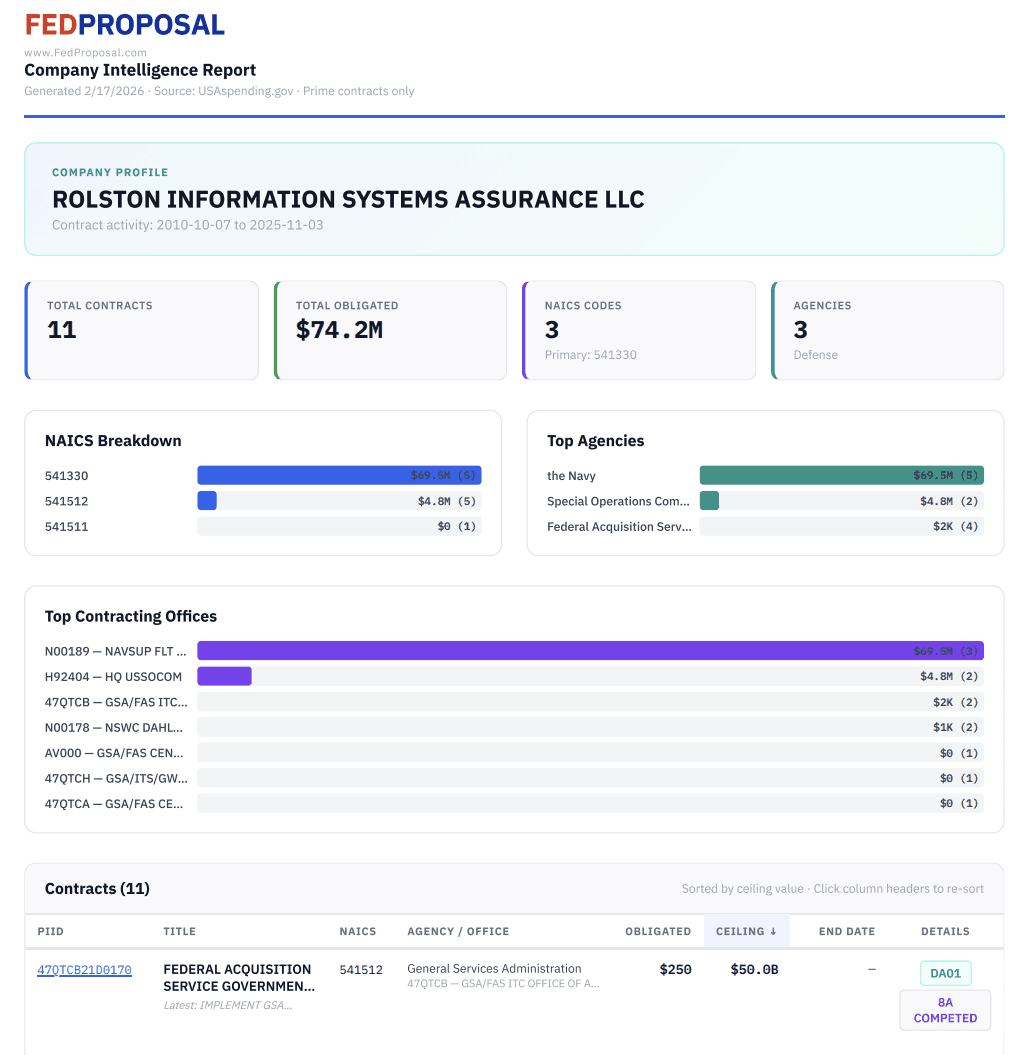
How FedProposal helps: Filter our expiring contracts dashboard by 8(a) set-asides to find recompetes reserved for your category. Our agency small business performance data shows which agencies are behind on their 8(a) goals—those agencies are actively looking for 8(a) contractors to help close the gap.
Service-Disabled Veteran-Owned Small Business (SDVOSB)
The SDVOSB program recognizes and rewards the service of veterans with disabilities connected to their military service.
Key Features:
Eligibility: At least 51% owned and controlled by one or more service-disabled veterans; the veteran must manage day-to-day operations
Certification: Managed by the SBA (previously the VA)
Benefits:
Agencies—especially VA and DoD—must meet spending goals for SDVOSBs
Sole-source awards up to $4.5 million
Set-aside competitions limited to SDVOSBs
How to Leverage SDVOSB:
Target the Department of Veterans Affairs—they have the strongest mandate to award to SDVOSBs
Highlight your veteran-owned status in marketing and outreach
Team with larger primes who need SDVOSBs to meet subcontracting goals
How FedProposal helps: Our daily SAM alerts let you filter by set-aside type, so you'll see SDVOSB opportunities the moment they post. Use our agency small business performance dashboard to find agencies falling short on SDVOSB goals—especially VA and DoD components where veteran-owned businesses are a priority.
Veteran-Owned Small Business (VOSB)
The VOSB program supports veteran entrepreneurs who may not have a service-connected disability but still want to leverage their military service in federal contracting.
Key Features:
Eligibility: At least 51% owned and controlled by one or more veterans; the veteran must manage day-to-day operations
Certification: Self-certified through SAM.gov (no SBA certification required)
Benefits:
Counts toward agency veteran-owned contracting goals
Recognized status for teaming and subcontracting opportunities
Some agencies prioritize veteran-owned businesses in evaluations
How to Leverage VOSB:
Use VOSB status as a differentiator when competing for full-and-open contracts
Team with primes who need veteran-owned subcontractors to meet their subcontracting plans
Consider pursuing SDVOSB certification if you qualify—it opens additional set-aside opportunities
How FedProposal helps: While VOSB doesn't have dedicated set-asides like SDVOSB, our agency small business performance data shows which agencies prioritize veteran-owned contractors. Target agencies with strong veteran hiring goals and highlight your VOSB status in your capability statements.
Historically Underutilized Business Zone (HUBZone)
The HUBZone Program focuses on place-based economic development, providing opportunities to small businesses operating in areas that have historically lacked investment.
Key Features:
Eligibility:
Principal office located in a designated HUBZone
At least 35% of employees must reside in a HUBZone
Benefits:
10% price evaluation preference in full-and-open competitions
Eligible for set-asides and sole-source awards up to $4.5 million ($7.5 million for manufacturing)
Agencies have annual HUBZone contracting goals
How to Leverage HUBZone:
Use the price evaluation preference strategically when competing against non-HUBZone firms
Maintain staffing models that meet the 35% employee residency requirement
HUBZone status can be a differentiator—fewer firms pursue or maintain certification compared to other programs
How FedProposal helps: Filter expiring contracts by HUBZone set-asides to find upcoming recompetes. HUBZone is one of the categories where agencies most often fall short of their goals—our agency performance dashboard helps you identify which agencies need HUBZone contractors most.
Women-Owned Small Business (WOSB) and Economically Disadvantaged Women-Owned Small Business (EDWOSB)
The WOSB Program increases participation of women entrepreneurs in federal contracting.
Key Features:
Eligibility: At least 51% owned and controlled by one or more women; for EDWOSB, the woman must also meet economic disadvantage criteria
Certification: Through SBA or an approved third-party certifier
Benefits:
Certain NAICS codes are reserved specifically for WOSB/EDWOSB set-asides
Sole-source authority available in industries where women are underrepresented
Agencies have spending goals for WOSBs
How to Leverage WOSB:
Focus on industries where WOSB set-asides are most common (professional services, administrative support, IT, healthcare)
Target agencies lagging behind on their WOSB spending goals
Use joint ventures and mentor-protégé agreements to scale up
How FedProposal helps: Our SAM alerts and expiring contracts dashboard both support WOSB/EDWOSB filters. Identify WOSB set-aside opportunities early and track which agencies are under pressure to meet their women-owned small business targets.
Comparing the Programs
Program | Ownership Requirement | Sole Source Threshold | Key Advantage |
|---|---|---|---|
8(a) | 51% socially & economically disadvantaged | $4.5M ($7.5M manufacturing) | Business development + sole source authority |
SDVOSB | 51% service-disabled veteran | $4.5M | Strong agency support (VA, DoD) |
VOSB | 51% veteran owned | None (No Set Aside Program) | Subcontracting recognition and teaming differentiator |
HUBZone | Principal office in HUBZone + 35% employees in HUBZone | $4.5M ($7.5M manufacturing) | 10% price evaluation preference |
WOSB/EDWOSB | 51% owned & controlled by women | $4.5M | Industry-specific set-asides |
Leverage Multiple Certifications
If you're eligible for more than one program, pursue multiple designations. A woman-owned, service-disabled veteran-owned business in a HUBZone can market itself under three different categories—tripling the number of set-aside opportunities available.
Each certification opens a different door. The more doors you can walk through, the more opportunities you can pursue.
The Secret Weapon: Agency Small Business Goals
Here's what most certified contractors miss: Not all agencies are created equal when it comes to your certification.
Every federal agency has small business contracting goals set by the SBA. These aren't suggestions—agencies report on their performance, and falling short creates pressure to find qualified small businesses fast.
If you're an SDVOSB and the VA is behind on their veteran-owned goals, that's an agency actively looking for contractors like you. If you're HUBZone certified and an agency is 4% below their HUBZone target, your certification just became a competitive advantage.
Most contractors don't track this data. They should.
How FedProposal helps: Our agency small business performance dashboard shows exactly how each agency is tracking against their SBA goals—broken down by 8(a), SDVOSB, HUBZone, WOSB, and overall small business. Stop guessing which agencies need you. Start targeting the ones under pressure to award to your category.
Finding Set-Aside Opportunities Early
Having a certification means nothing if you can't find the opportunities reserved for you. Most certified contractors rely on SAM.gov saved searches—and get the same frustrating, detail-free alerts everyone else gets.
A smarter approach:
Daily SAM alerts filtered by set-aside: Get notified when new opportunities matching your certification post—with actual details, not vague links
Expiring contracts filtered by set-aside: Find recompetes reserved for your category 12–18 months before they hit SAM.gov
Agency forecasts: See what's coming and start positioning early
Agency SB performance data: Target agencies that need your certification to meet their goals
How FedProposal helps: Every search in FedProposal—SAM alerts, expiring contracts, forecasts—can be filtered by set-aside type. Combine that with our agency performance data, and you're not just finding set-aside opportunities. You're finding the ones where your certification gives you the biggest edge.
Practical Strategies to Maximize Your Certification
Do Your Market Research
Use FedProposal's expiring contracts dashboard to see which agencies buy what you sell—and filter by your set-aside category. Focus on agencies that consistently award contracts to businesses like yours.
Pursue Mentor-Protégé and Joint Ventures
These structures let you team with experienced firms while still qualifying as a small business for set-aside competitions. They're especially powerful for 8(a) contractors looking to build past performance.
Build Past Performance Early
Subcontracting can be an effective entry point before pursuing prime contracts. Every subcontract builds your resume for the next prime opportunity.
Market Your Certification
Don't just list it on your website. Actively communicate your status to contracting officers and primes. Attend agency OSDBU events. Make sure the people awarding contracts know you exist.
How FedProposal helps: Our directory of 43 official agency small business portals gives you direct links to OSDBU offices across Defense and civilian agencies. These are the small business specialists who can connect you with opportunities and primes looking for teaming partners.
Common Pitfalls to Avoid
Assuming certification equals contracts: The designation is a tool, not a guarantee. You still need to market, build relationships, and compete.
Letting certification lapse: Keep documentation current and stay compliant with program rules. Losing certification mid-pursuit can be devastating.
Not planning for life after 8(a): Businesses that fail to prepare for graduation often struggle to compete once the nine years end.
Overreliance on sole source: While valuable, relying only on sole-source awards limits growth and visibility. Compete for work too.
Ignoring agency goals: Your certification is worth more to agencies that need it. Target accordingly.
Conclusion: Turn Your Certification Into a Competitive Weapon
Small business set-aside programs are among the most powerful tools available in federal contracting. Each program—8(a), SDVOSB, HUBZone, and WOSB—has unique requirements and benefits, but all provide access to contracts that large businesses simply can't pursue.
The key isn't just qualifying. It's building a strategy around your certification:
Find set-aside opportunities early using filtered searches and expiring contract data
Target agencies under pressure to meet their small business goals
Build relationships with OSDBU offices and primes looking for teaming partners
Use your certification as a differentiator, not just a checkbox
FedProposal gives you the tools to do all of this: daily SAM alerts filtered by set-aside type, an expiring contracts dashboard with set-aside filters, agency small business performance data, and a directory of OSDBU contacts across 43 agencies.
Your certification opens doors. FedProposal helps you find them.
Before diving into each program, it's important to understand the mechanics of a set-aside. A federal contracting officer has the discretion—and sometimes the mandate—to reserve a contract opportunity for a specific category of small business. This means:
Only businesses certified in that category can bid
Large businesses are excluded
Competition is limited, often making the field more manageable for small firms
There are two main types of set-asides:
Competitive Set-Asides: Two or more eligible small businesses compete for the award
Sole Source Awards: The contracting officer can directly award to a certified firm without competition, under certain dollar thresholds
The programs exist because Congress and the SBA recognize that small businesses can't always compete head-to-head with large primes. Set-asides level the playing field.
Let's look at each program individually.
8(a) Business Development Program
The 8(a) Program is designed to help small, socially and economically disadvantaged businesses compete in the federal marketplace. It's one of the most powerful designations available.
Key Features:
Eligibility: At least 51% owned and controlled by socially and economically disadvantaged individuals
Duration: A one-time, nine-year program (four years developmental, five years transitional)
Benefits:
Sole-source contracts up to $4.5 million (up to $7.5 million for manufacturing)
Reserved set-aside competitions
Business development assistance, mentoring, and training
Access to the SBA's Mentor-Protégé Program
How to Leverage 8(a):
Pursue mentor-protégé agreements to partner with experienced primes
Use the nine years strategically—build relationships and past performance early
Focus on graduating strong; the program is temporary, so create a pipeline that sustains beyond 8(a)
How FedProposal helps: Filter our expiring contracts dashboard by 8(a) set-asides to find recompetes reserved for your category. Our agency small business performance data shows which agencies are behind on their 8(a) goals—those agencies are actively looking for 8(a) contractors to help close the gap.
Service-Disabled Veteran-Owned Small Business (SDVOSB)
The SDVOSB program recognizes and rewards the service of veterans with disabilities connected to their military service.
Key Features:
Eligibility: At least 51% owned and controlled by one or more service-disabled veterans; the veteran must manage day-to-day operations
Certification: Managed by the SBA (previously the VA)
Benefits:
Agencies—especially VA and DoD—must meet spending goals for SDVOSBs
Sole-source awards up to $4.5 million
Set-aside competitions limited to SDVOSBs
How to Leverage SDVOSB:
Target the Department of Veterans Affairs—they have the strongest mandate to award to SDVOSBs
Highlight your veteran-owned status in marketing and outreach
Team with larger primes who need SDVOSBs to meet subcontracting goals
How FedProposal helps: Our daily SAM alerts let you filter by set-aside type, so you'll see SDVOSB opportunities the moment they post. Use our agency small business performance dashboard to find agencies falling short on SDVOSB goals—especially VA and DoD components where veteran-owned businesses are a priority.
Veteran-Owned Small Business (VOSB)
The VOSB program supports veteran entrepreneurs who may not have a service-connected disability but still want to leverage their military service in federal contracting.
Key Features:
Eligibility: At least 51% owned and controlled by one or more veterans; the veteran must manage day-to-day operations
Certification: Self-certified through SAM.gov (no SBA certification required)
Benefits:
Counts toward agency veteran-owned contracting goals
Recognized status for teaming and subcontracting opportunities
Some agencies prioritize veteran-owned businesses in evaluations
How to Leverage VOSB:
Use VOSB status as a differentiator when competing for full-and-open contracts
Team with primes who need veteran-owned subcontractors to meet their subcontracting plans
Consider pursuing SDVOSB certification if you qualify—it opens additional set-aside opportunities
How FedProposal helps: While VOSB doesn't have dedicated set-asides like SDVOSB, our agency small business performance data shows which agencies prioritize veteran-owned contractors. Target agencies with strong veteran hiring goals and highlight your VOSB status in your capability statements.
Historically Underutilized Business Zone (HUBZone)
The HUBZone Program focuses on place-based economic development, providing opportunities to small businesses operating in areas that have historically lacked investment.
Key Features:
Eligibility:
Principal office located in a designated HUBZone
At least 35% of employees must reside in a HUBZone
Benefits:
10% price evaluation preference in full-and-open competitions
Eligible for set-asides and sole-source awards up to $4.5 million ($7.5 million for manufacturing)
Agencies have annual HUBZone contracting goals
How to Leverage HUBZone:
Use the price evaluation preference strategically when competing against non-HUBZone firms
Maintain staffing models that meet the 35% employee residency requirement
HUBZone status can be a differentiator—fewer firms pursue or maintain certification compared to other programs
How FedProposal helps: Filter expiring contracts by HUBZone set-asides to find upcoming recompetes. HUBZone is one of the categories where agencies most often fall short of their goals—our agency performance dashboard helps you identify which agencies need HUBZone contractors most.
Women-Owned Small Business (WOSB) and Economically Disadvantaged Women-Owned Small Business (EDWOSB)
The WOSB Program increases participation of women entrepreneurs in federal contracting.
Key Features:
Eligibility: At least 51% owned and controlled by one or more women; for EDWOSB, the woman must also meet economic disadvantage criteria
Certification: Through SBA or an approved third-party certifier
Benefits:
Certain NAICS codes are reserved specifically for WOSB/EDWOSB set-asides
Sole-source authority available in industries where women are underrepresented
Agencies have spending goals for WOSBs
How to Leverage WOSB:
Focus on industries where WOSB set-asides are most common (professional services, administrative support, IT, healthcare)
Target agencies lagging behind on their WOSB spending goals
Use joint ventures and mentor-protégé agreements to scale up
How FedProposal helps: Our SAM alerts and expiring contracts dashboard both support WOSB/EDWOSB filters. Identify WOSB set-aside opportunities early and track which agencies are under pressure to meet their women-owned small business targets.
Comparing the Programs
Program | Ownership Requirement | Sole Source Threshold | Key Advantage |
|---|---|---|---|
8(a) | 51% socially & economically disadvantaged | $4.5M ($7.5M manufacturing) | Business development + sole source authority |
SDVOSB | 51% service-disabled veteran | $4.5M | Strong agency support (VA, DoD) |
VOSB | 51% veteran owned | None (No Set Aside Program) | Subcontracting recognition and teaming differentiator |
HUBZone | Principal office in HUBZone + 35% employees in HUBZone | $4.5M ($7.5M manufacturing) | 10% price evaluation preference |
WOSB/EDWOSB | 51% owned & controlled by women | $4.5M | Industry-specific set-asides |
Leverage Multiple Certifications
If you're eligible for more than one program, pursue multiple designations. A woman-owned, service-disabled veteran-owned business in a HUBZone can market itself under three different categories—tripling the number of set-aside opportunities available.
Each certification opens a different door. The more doors you can walk through, the more opportunities you can pursue.
The Secret Weapon: Agency Small Business Goals
Here's what most certified contractors miss: Not all agencies are created equal when it comes to your certification.
Every federal agency has small business contracting goals set by the SBA. These aren't suggestions—agencies report on their performance, and falling short creates pressure to find qualified small businesses fast.
If you're an SDVOSB and the VA is behind on their veteran-owned goals, that's an agency actively looking for contractors like you. If you're HUBZone certified and an agency is 4% below their HUBZone target, your certification just became a competitive advantage.
Most contractors don't track this data. They should.
How FedProposal helps: Our agency small business performance dashboard shows exactly how each agency is tracking against their SBA goals—broken down by 8(a), SDVOSB, HUBZone, WOSB, and overall small business. Stop guessing which agencies need you. Start targeting the ones under pressure to award to your category.
Finding Set-Aside Opportunities Early
Having a certification means nothing if you can't find the opportunities reserved for you. Most certified contractors rely on SAM.gov saved searches—and get the same frustrating, detail-free alerts everyone else gets.
A smarter approach:
Daily SAM alerts filtered by set-aside: Get notified when new opportunities matching your certification post—with actual details, not vague links
Expiring contracts filtered by set-aside: Find recompetes reserved for your category 12–18 months before they hit SAM.gov
Agency forecasts: See what's coming and start positioning early
Agency SB performance data: Target agencies that need your certification to meet their goals
How FedProposal helps: Every search in FedProposal—SAM alerts, expiring contracts, forecasts—can be filtered by set-aside type. Combine that with our agency performance data, and you're not just finding set-aside opportunities. You're finding the ones where your certification gives you the biggest edge.
Practical Strategies to Maximize Your Certification
Do Your Market Research
Use FedProposal's expiring contracts dashboard to see which agencies buy what you sell—and filter by your set-aside category. Focus on agencies that consistently award contracts to businesses like yours.
Pursue Mentor-Protégé and Joint Ventures
These structures let you team with experienced firms while still qualifying as a small business for set-aside competitions. They're especially powerful for 8(a) contractors looking to build past performance.
Build Past Performance Early
Subcontracting can be an effective entry point before pursuing prime contracts. Every subcontract builds your resume for the next prime opportunity.
Market Your Certification
Don't just list it on your website. Actively communicate your status to contracting officers and primes. Attend agency OSDBU events. Make sure the people awarding contracts know you exist.
How FedProposal helps: Our directory of 43 official agency small business portals gives you direct links to OSDBU offices across Defense and civilian agencies. These are the small business specialists who can connect you with opportunities and primes looking for teaming partners.
Common Pitfalls to Avoid
Assuming certification equals contracts: The designation is a tool, not a guarantee. You still need to market, build relationships, and compete.
Letting certification lapse: Keep documentation current and stay compliant with program rules. Losing certification mid-pursuit can be devastating.
Not planning for life after 8(a): Businesses that fail to prepare for graduation often struggle to compete once the nine years end.
Overreliance on sole source: While valuable, relying only on sole-source awards limits growth and visibility. Compete for work too.
Ignoring agency goals: Your certification is worth more to agencies that need it. Target accordingly.
Conclusion: Turn Your Certification Into a Competitive Weapon
Small business set-aside programs are among the most powerful tools available in federal contracting. Each program—8(a), SDVOSB, HUBZone, and WOSB—has unique requirements and benefits, but all provide access to contracts that large businesses simply can't pursue.
The key isn't just qualifying. It's building a strategy around your certification:
Find set-aside opportunities early using filtered searches and expiring contract data
Target agencies under pressure to meet their small business goals
Build relationships with OSDBU offices and primes looking for teaming partners
Use your certification as a differentiator, not just a checkbox
FedProposal gives you the tools to do all of this: daily SAM alerts filtered by set-aside type, an expiring contracts dashboard with set-aside filters, agency small business performance data, and a directory of OSDBU contacts across 43 agencies.
Your certification opens doors. FedProposal helps you find them.