Technical
Marketing for Government Contractors: Building Visibility and Trust in the Federal Marketplace
Marketing in the federal contracting world looks very different from what most commercial companies are used to. For government contractors, the "customer" isn't a consumer browsing a store or scrolling through social media—it's a federal agency with complex missions, procurement regulations, and a long acquisition cycle. Winning government work requires much more than simply responding to RFPs. Contractors need to build visibility, trust, and relationships with the agencies they serve. That means marketing for government contractors is less about flashy campaigns and more about strategically positioning your firm in front of the right decision-makers, at the right time, with the right capabilities.
In this article, we'll walk through the fundamentals of marketing for government contractors. We'll cover why marketing matters in such a regulated space, what strategies actually work, and how small and mid-sized businesses can build brand recognition without massive budgets. From understanding your target agencies to leveraging capability statements, websites, events, and even digital channels, we'll explore practical ways to make your company more visible and competitive in the federal marketplace. Whether you're an 8(a), HUBZone, SDVOSB, or simply a prime/sub ready to expand, you'll come away with a roadmap for smarter government contracting marketing.
Marketing in the federal contracting world looks very different from what most commercial companies are used to. For government contractors, the "customer" isn't a consumer browsing a store or scrolling through social media—it's a federal agency with complex missions, procurement regulations, and a long acquisition cycle. Winning government work requires much more than simply responding to RFPs. Contractors need to build visibility, trust, and relationships with the agencies they serve. That means marketing for government contractors is less about flashy campaigns and more about strategically positioning your firm in front of the right decision-makers, at the right time, with the right capabilities.
In this article, we'll walk through the fundamentals of marketing for government contractors. We'll cover why marketing matters in such a regulated space, what strategies actually work, and how small and mid-sized businesses can build brand recognition without massive budgets. From understanding your target agencies to leveraging capability statements, websites, events, and even digital channels, we'll explore practical ways to make your company more visible and competitive in the federal marketplace. Whether you're an 8(a), HUBZone, SDVOSB, or simply a prime/sub ready to expand, you'll come away with a roadmap for smarter government contracting marketing.


Why Marketing Matters in Government Contracting
Some business owners believe that federal contracting is purely transactional: you bid, you win or lose, and that's it. But government buyers are still people. They want to reduce risk, work with trusted partners, and avoid surprises. Marketing helps you:
Establish brand recognition so your company isn't a stranger when a solicitation drops
Build trust with contracting officers and program managers before procurement
Position your capabilities clearly so buyers understand exactly what you do
Differentiate your business from competitors with similar NAICS codes
Create repeat opportunities by being top-of-mind for agency decision-makers
Without marketing, you're invisible until you submit a bid. With marketing, you're laying the groundwork months or even years before the opportunity becomes formal.
Understanding Your Target Market
The first step in any government marketing strategy is clarity about who your customer really is.
Identify Priority Agencies
Not every agency is a good fit for your company. Narrow your focus by identifying 3–5 target agencies that align with your core capabilities. Use tools like:
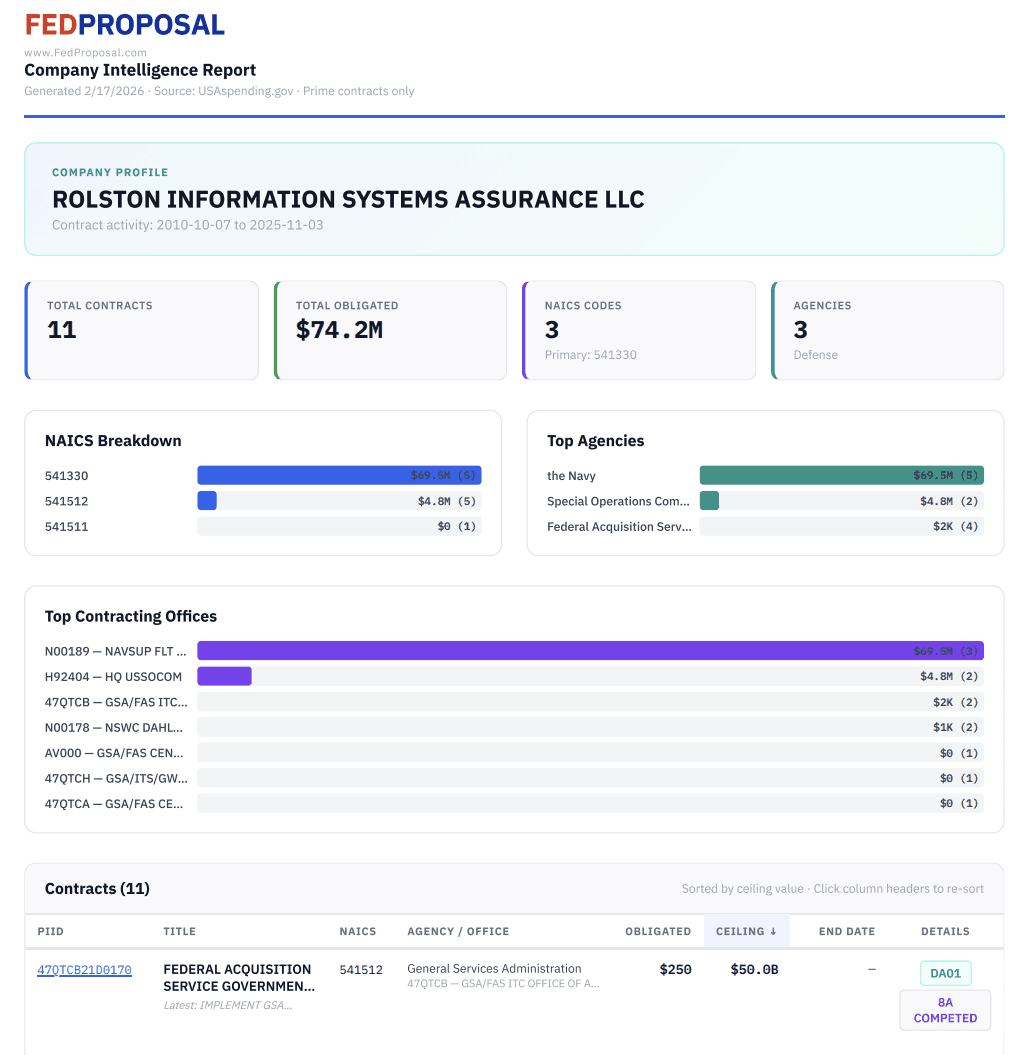
FPDS and USASpending.gov to see which agencies buy what you sell
Agency forecasts to spot upcoming needs before they hit SAM.gov
Past solicitation data to understand contract vehicles and procurement patterns
By concentrating your marketing, you avoid wasting time chasing every possible opportunity.
Know the Decision-Makers
In government contracting, there are multiple audiences:
Contracting Officers (COs): Control the procurement process
Program Managers (PMs): Care about mission success and technical needs
Small Business Specialists: Advocate for small firms within agencies
End Users: The people who will actually use your product or service
Tailoring your message for each group ensures your marketing resonates. You can find small business office contacts through agency OSDBU directories.
Core Marketing Tools for Government Contractors
Capability Statement
Think of your capability statement as your business card on steroids. It should be:
One page, clean, and professional
Branded with your logo and contact details
Organized with key sections: core competencies, past performance, differentiators, company data (UEI, CAGE, NAICS, etc.)
This is the most requested marketing asset in federal contracting. Keep it updated and tailored for each agency.
Company Website
Your website is often the first impression. Government buyers will look you up, even if you hand them a capability statement. A contractor website should:
Highlight past performance with case studies
Include your NAICS codes, contract vehicles, and small business certifications
Be professional, clear, and easy to navigate
Avoid jargon—focus on mission outcomes and solutions
For guidance on building a government-focused website, see our post on small business government contractor websites.
Past Performance Portfolio
Agencies want to see proof that you can deliver. Build a library of short, compelling descriptions of past projects, emphasizing results, customer satisfaction, and relevance.
Building Relationships
Marketing in federal contracting is less about ads and more about networking and relationship-building.
Industry Events and Conferences
Events like SAME, NCMA, and agency-specific industry days are prime opportunities to meet decision-makers. When attending:
Do your homework on attendees and agencies beforehand
Bring tailored capability statements
Follow up quickly after meetings with a short note and next steps
Looking for free training opportunities? Check out our curated list of APEX Accelerator webinars covering capture, proposals, pricing, and certifications.
Partnering with Other Contractors
Subcontracting and teaming are powerful marketing avenues. Larger primes are constantly seeking reliable partners with niche capabilities or small business certifications. To market yourself as a valuable teammate:
Be specific about what you bring to the table
Demonstrate reliability with references and past work
Network at matchmaking events and in professional associations
Digital Marketing in Government Contracting
While traditional networking is essential, digital channels play a growing role.
LinkedIn is where many government contractors and decision-makers engage professionally. Use it to:
Share insights relevant to your industry
Announce contract wins or certifications
Connect with contracting professionals
Email Outreach
Targeted, respectful email campaigns can keep you on the radar of COs, PMs, and primes. Best practices include:
Keep messages short and mission-focused
Highlight relevant contract vehicles and certifications
Offer a capability statement or past performance summary
Thought Leadership
Publishing articles, white papers, or hosting webinars demonstrates expertise and positions your company as a thought leader in your niche.
Practical Marketing Strategy for Small and Mid-Sized Businesses
If you're a small business with limited resources, focus on a few high-impact tactics:
Polish your capability statement and website — these are foundational tools
Target 3 agencies — go deep instead of wide
Network consistently — attend industry days, follow up diligently
Leverage small business certifications — market your 8(a), HUBZone, SDVOSB, or WOSB status as a competitive differentiator
Build partnerships — team with primes to gain past performance and visibility
Verify and Showcase Your Certifications
If you hold SBA certifications, make sure they're visible and up to date. The SBA Certification Search is the official government database where contracting officers and prime contractors verify small business credentials. This is where buyers go to confirm your 8(a), HUBZone, WOSB, EDWOSB, or SDVOSB status before awarding set-aside contracts.
Marketing tips for certified businesses:
Ensure your certification is active and current in the SBA database
Include your certification logos on your capability statement and website
Reference your certification status in email outreach and LinkedIn
Use the SBA search tool yourself to find other certified firms for teaming opportunities
Over time, as your budget grows, expand into content marketing, webinars, and more sophisticated outreach.
Pro tip: Use agency small business scorecards to identify which agencies are falling short on their set-aside goals—they're actively looking for contractors like you.
Common Mistakes in Government Contractor Marketing
Being too generic: "We do everything for everyone" doesn't resonate
Neglecting the website: Outdated or vague websites undermine credibility
Not tailoring outreach: Sending the same capability statement to every agency shows lack of preparation
Failing to follow up: Many opportunities are lost because contractors don't maintain contact after initial meetings
Chasing every opportunity: Spreading too thin without focus reduces effectiveness
Compliance Considerations
Unlike commercial marketing, federal contractor marketing must be mindful of procurement integrity rules. Avoid:
Offering gifts or incentives to COs or PMs
Sharing sensitive or proprietary information in public forums
Overpromising beyond your capabilities
Stay professional, ethical, and compliant—reputation is everything in this space.
A Sustainable Marketing Plan
A good government contractor marketing plan is a living document, not a one-time effort. Consider this framework:
Element | Action | Frequency |
|---|---|---|
Capability Statement | Update and tailor for each agency | Quarterly or as needed |
Website | Review for relevance and accuracy | Semi-annual |
Networking | Attend industry days and agency events | Monthly/Quarterly |
Digital Presence | Post on LinkedIn, share thought leadership | Weekly/Monthly |
Partnerships | Meet with primes, explore teaming | Ongoing |
This rhythm keeps your company visible and top-of-mind without overwhelming your team.
Final Thoughts
Marketing for government contractors isn't about flashy slogans or expensive ad campaigns. It's about focus, credibility, and relationships. The most successful contractors are those who:
Know their target agencies and decision-makers
Present themselves with professionalism and clarity
Show consistent, reliable presence in the federal marketplace
Invest in relationships long before an RFP is released
By combining foundational tools like capability statements and websites with networking, digital presence, and strategic partnerships, even small businesses can build a strong brand in government contracting.
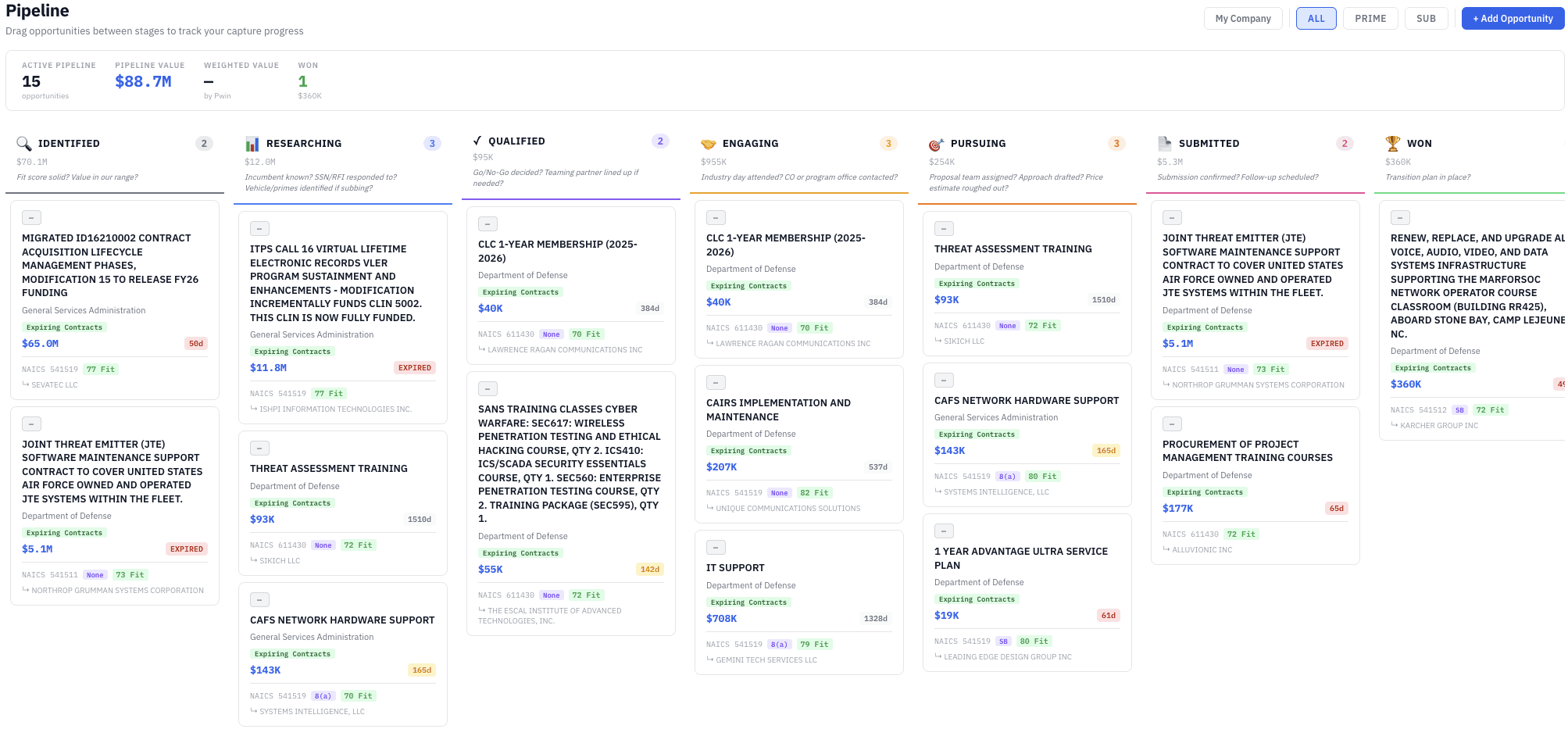
Ready to find the right opportunities? See how FedProposal helps small businesses identify contracts that match their capabilities—before the competition.
Why Marketing Matters in Government Contracting
Some business owners believe that federal contracting is purely transactional: you bid, you win or lose, and that's it. But government buyers are still people. They want to reduce risk, work with trusted partners, and avoid surprises. Marketing helps you:
Establish brand recognition so your company isn't a stranger when a solicitation drops
Build trust with contracting officers and program managers before procurement
Position your capabilities clearly so buyers understand exactly what you do
Differentiate your business from competitors with similar NAICS codes
Create repeat opportunities by being top-of-mind for agency decision-makers
Without marketing, you're invisible until you submit a bid. With marketing, you're laying the groundwork months or even years before the opportunity becomes formal.
Understanding Your Target Market
The first step in any government marketing strategy is clarity about who your customer really is.
Identify Priority Agencies
Not every agency is a good fit for your company. Narrow your focus by identifying 3–5 target agencies that align with your core capabilities. Use tools like:
FPDS and USASpending.gov to see which agencies buy what you sell
Agency forecasts to spot upcoming needs before they hit SAM.gov
Past solicitation data to understand contract vehicles and procurement patterns
By concentrating your marketing, you avoid wasting time chasing every possible opportunity.
Know the Decision-Makers
In government contracting, there are multiple audiences:
Contracting Officers (COs): Control the procurement process
Program Managers (PMs): Care about mission success and technical needs
Small Business Specialists: Advocate for small firms within agencies
End Users: The people who will actually use your product or service
Tailoring your message for each group ensures your marketing resonates. You can find small business office contacts through agency OSDBU directories.
Core Marketing Tools for Government Contractors
Capability Statement
Think of your capability statement as your business card on steroids. It should be:
One page, clean, and professional
Branded with your logo and contact details
Organized with key sections: core competencies, past performance, differentiators, company data (UEI, CAGE, NAICS, etc.)
This is the most requested marketing asset in federal contracting. Keep it updated and tailored for each agency.
Company Website
Your website is often the first impression. Government buyers will look you up, even if you hand them a capability statement. A contractor website should:
Highlight past performance with case studies
Include your NAICS codes, contract vehicles, and small business certifications
Be professional, clear, and easy to navigate
Avoid jargon—focus on mission outcomes and solutions
For guidance on building a government-focused website, see our post on small business government contractor websites.
Past Performance Portfolio
Agencies want to see proof that you can deliver. Build a library of short, compelling descriptions of past projects, emphasizing results, customer satisfaction, and relevance.
Building Relationships
Marketing in federal contracting is less about ads and more about networking and relationship-building.
Industry Events and Conferences
Events like SAME, NCMA, and agency-specific industry days are prime opportunities to meet decision-makers. When attending:
Do your homework on attendees and agencies beforehand
Bring tailored capability statements
Follow up quickly after meetings with a short note and next steps
Looking for free training opportunities? Check out our curated list of APEX Accelerator webinars covering capture, proposals, pricing, and certifications.
Partnering with Other Contractors
Subcontracting and teaming are powerful marketing avenues. Larger primes are constantly seeking reliable partners with niche capabilities or small business certifications. To market yourself as a valuable teammate:
Be specific about what you bring to the table
Demonstrate reliability with references and past work
Network at matchmaking events and in professional associations
Digital Marketing in Government Contracting
While traditional networking is essential, digital channels play a growing role.
LinkedIn is where many government contractors and decision-makers engage professionally. Use it to:
Share insights relevant to your industry
Announce contract wins or certifications
Connect with contracting professionals
Email Outreach
Targeted, respectful email campaigns can keep you on the radar of COs, PMs, and primes. Best practices include:
Keep messages short and mission-focused
Highlight relevant contract vehicles and certifications
Offer a capability statement or past performance summary
Thought Leadership
Publishing articles, white papers, or hosting webinars demonstrates expertise and positions your company as a thought leader in your niche.
Practical Marketing Strategy for Small and Mid-Sized Businesses
If you're a small business with limited resources, focus on a few high-impact tactics:
Polish your capability statement and website — these are foundational tools
Target 3 agencies — go deep instead of wide
Network consistently — attend industry days, follow up diligently
Leverage small business certifications — market your 8(a), HUBZone, SDVOSB, or WOSB status as a competitive differentiator
Build partnerships — team with primes to gain past performance and visibility
Verify and Showcase Your Certifications
If you hold SBA certifications, make sure they're visible and up to date. The SBA Certification Search is the official government database where contracting officers and prime contractors verify small business credentials. This is where buyers go to confirm your 8(a), HUBZone, WOSB, EDWOSB, or SDVOSB status before awarding set-aside contracts.
Marketing tips for certified businesses:
Ensure your certification is active and current in the SBA database
Include your certification logos on your capability statement and website
Reference your certification status in email outreach and LinkedIn
Use the SBA search tool yourself to find other certified firms for teaming opportunities
Over time, as your budget grows, expand into content marketing, webinars, and more sophisticated outreach.
Pro tip: Use agency small business scorecards to identify which agencies are falling short on their set-aside goals—they're actively looking for contractors like you.
Common Mistakes in Government Contractor Marketing
Being too generic: "We do everything for everyone" doesn't resonate
Neglecting the website: Outdated or vague websites undermine credibility
Not tailoring outreach: Sending the same capability statement to every agency shows lack of preparation
Failing to follow up: Many opportunities are lost because contractors don't maintain contact after initial meetings
Chasing every opportunity: Spreading too thin without focus reduces effectiveness
Compliance Considerations
Unlike commercial marketing, federal contractor marketing must be mindful of procurement integrity rules. Avoid:
Offering gifts or incentives to COs or PMs
Sharing sensitive or proprietary information in public forums
Overpromising beyond your capabilities
Stay professional, ethical, and compliant—reputation is everything in this space.
A Sustainable Marketing Plan
A good government contractor marketing plan is a living document, not a one-time effort. Consider this framework:
Element | Action | Frequency |
|---|---|---|
Capability Statement | Update and tailor for each agency | Quarterly or as needed |
Website | Review for relevance and accuracy | Semi-annual |
Networking | Attend industry days and agency events | Monthly/Quarterly |
Digital Presence | Post on LinkedIn, share thought leadership | Weekly/Monthly |
Partnerships | Meet with primes, explore teaming | Ongoing |
This rhythm keeps your company visible and top-of-mind without overwhelming your team.
Final Thoughts
Marketing for government contractors isn't about flashy slogans or expensive ad campaigns. It's about focus, credibility, and relationships. The most successful contractors are those who:
Know their target agencies and decision-makers
Present themselves with professionalism and clarity
Show consistent, reliable presence in the federal marketplace
Invest in relationships long before an RFP is released
By combining foundational tools like capability statements and websites with networking, digital presence, and strategic partnerships, even small businesses can build a strong brand in government contracting.
Ready to find the right opportunities? See how FedProposal helps small businesses identify contracts that match their capabilities—before the competition.