Technical
How to Qualify Opportunities Before You Bid
One of the most expensive mistakes in government contracting isn't losing a bid—it's chasing the wrong ones. Every proposal costs time, money, and energy. A modest response might take 40 hours. A complex bid can consume hundreds of hours and tens of thousands of dollars. When you're bidding on opportunities you were never going to win, those resources are gone.
The contractors with the best win rates aren't submitting the most proposals. They're submitting fewer, smarter proposals—and saying no to everything else.
But making good pursuit decisions requires intelligence: Who's the incumbent? What has the government paid? Is the agency happy with the current contractor? Does your company actually fit the requirement? Gathering that data manually means hours in FPDS, USAspending, and SAM.gov—time most small BD teams don't have.
In this post, we'll break down a repeatable framework for qualifying opportunities before you commit to a proposal. We'll cover customer alignment, contract fit, competitive positioning, and business economics—the four pillars of a solid bid/no-bid decision. And we'll show you how FedProposal's Fit Score, incumbent analysis, and agency small business performance data can help you make those decisions in minutes instead of days.
Stop chasing. Start qualifying.
One of the most expensive mistakes in government contracting isn't losing a bid—it's chasing the wrong ones. Every proposal costs time, money, and energy. A modest response might take 40 hours. A complex bid can consume hundreds of hours and tens of thousands of dollars. When you're bidding on opportunities you were never going to win, those resources are gone.
The contractors with the best win rates aren't submitting the most proposals. They're submitting fewer, smarter proposals—and saying no to everything else.
But making good pursuit decisions requires intelligence: Who's the incumbent? What has the government paid? Is the agency happy with the current contractor? Does your company actually fit the requirement? Gathering that data manually means hours in FPDS, USAspending, and SAM.gov—time most small BD teams don't have.
In this post, we'll break down a repeatable framework for qualifying opportunities before you commit to a proposal. We'll cover customer alignment, contract fit, competitive positioning, and business economics—the four pillars of a solid bid/no-bid decision. And we'll show you how FedProposal's Fit Score, incumbent analysis, and agency small business performance data can help you make those decisions in minutes instead of days.
Stop chasing. Start qualifying.


Federal contractors often get caught in the trap of bidding on everything. It's easy to think, "If we don't bid, we can't win." But chasing opportunities without qualification is one of the fastest ways to waste resources, frustrate your proposal team, and hurt your win rate.
The reality is this: successful contractors win because they choose wisely, not because they chase widely.
This guide breaks down how to evaluate opportunities before you bid—and how FedProposal's tools can help you make smarter pursuit decisions faster.
Why Qualification Matters
Every proposal comes with a cost. Even a modest response to a federal solicitation requires time, labor, and overhead. For complex bids, you may be investing hundreds of hours and tens of thousands of dollars. Without a clear qualification process, that investment is often wasted on opportunities you were never going to win.
Strong qualification does three things:
Protects your resources from being spent on unwinnable or unprofitable work
Raises your win probability by aligning your strengths with the right opportunities
Builds discipline into your growth strategy, making your pipeline more predictable
The contractors with the best win rates aren't the ones submitting the most proposals. They're the ones who've learned to say no.
The Bid/No-Bid Decision Framework
Most contractors use a decision framework to qualify opportunities before committing to a proposal. While frameworks vary, they generally include four major areas:
Customer alignment
Contract fit
Competitive position
Business economics
Let's look at each—and how to gather the intelligence you need.
1. Customer Alignment
The most important question: Do you know this customer?
Agencies award contracts to vendors they trust. Building that trust takes time. If you're showing up for the first time when the RFP drops, you're already behind.
Questions to ask:
Do you have an existing relationship with this agency or program office?
Have you met with decision-makers before the solicitation was released?
Do you understand the agency's mission, pain points, and budget priorities?
Have you performed similar work for this agency before?
If you answered "no" to most of these, your odds of winning drop significantly—especially against an incumbent who's been delivering for years.
How FedProposal helps: Our agency small business portal directory gives you direct links to 43 OSDBU offices across Defense and civilian agencies. Start building relationships now with the small business specialists who can connect you to program offices and upcoming opportunities.
2. Contract Fit
Next, assess whether the opportunity matches your capabilities.
Look for:
Scope: Does the work match your company's core expertise?
Size: Is the contract value realistic for your capacity and past performance?
Contract type: Are you comfortable with firm-fixed-price, cost-plus, or T&M?
Vehicle: Do you hold the required IDIQ, GWAC, or BPA?
Set-aside: Does your certification (8(a), SDVOSB, HUBZone, WOSB) match the requirement?
Clearances: Can you meet security requirements?
Misalignment here means higher risk and lower profitability—even if you win.
How FedProposal helps: Our expiring contracts dashboard lets you filter by set-aside type, NAICS code, and contract value so you're only looking at opportunities that fit your profile. Our contract insights surface bundled requirements, consolidation risks, and commercial procedures—red flags that might make an opportunity a poor fit.
3. Competitive Position
Winning federal contracts isn't about being the cheapest. It's about being the best positioned.
Ask yourself:
Who is the incumbent?
What are their strengths and weaknesses?
Do you have a clear differentiator—technical approach, past performance, price, or innovation?
Is the agency satisfied with the current contractor, or are there signs of dissatisfaction?
How many competitors are likely to bid?
A good rule of thumb: if you can't clearly articulate why the agency should pick you over the incumbent, you should reconsider bidding.
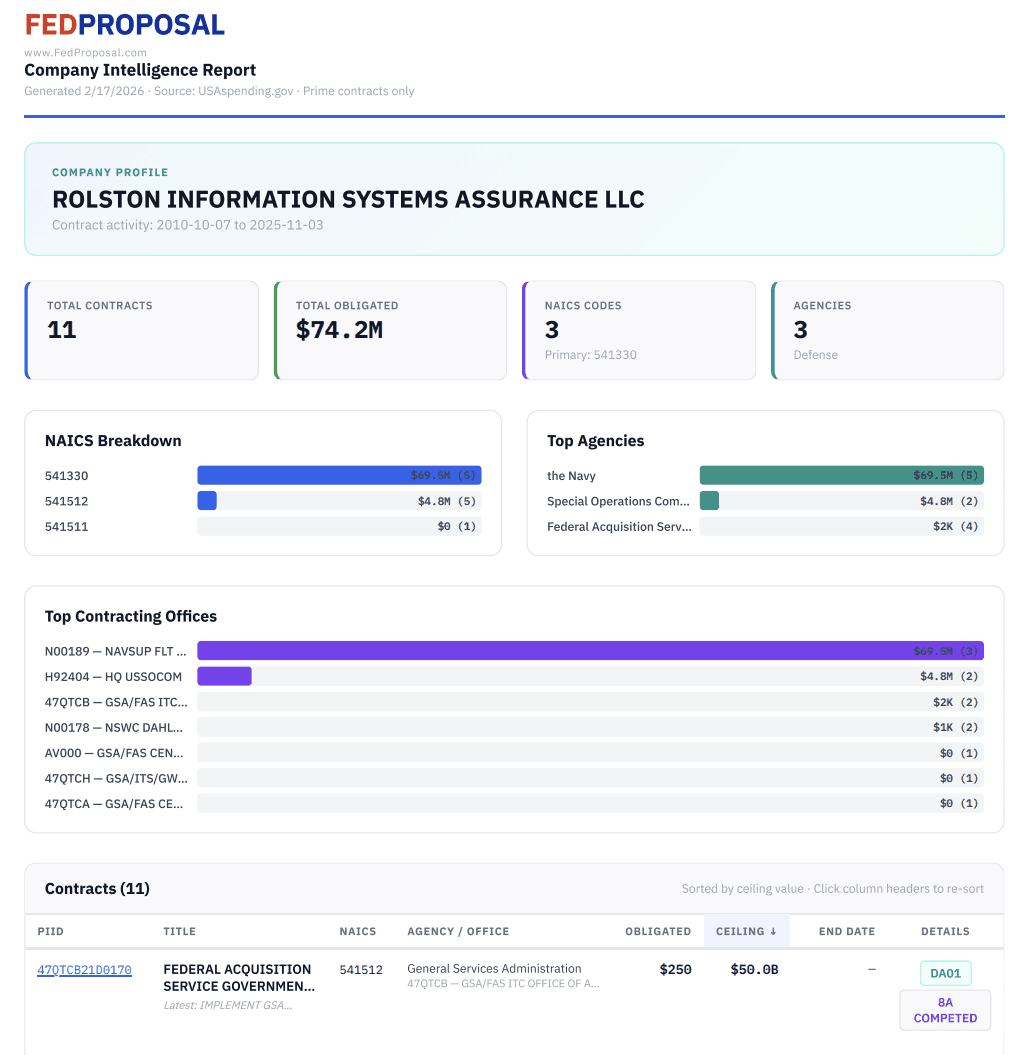
How FedProposal helps: Every contract in our dashboard includes incumbent analysis—who holds the work, what they've been paid, and how funding has trended over time. Our contract activity timeline shows option years, modifications, and obligation patterns. Declining spend can signal agency dissatisfaction; steady growth suggests an entrenched incumbent. This intelligence helps you decide whether there's a realistic path to winning.
4. Business Economics
Even if you can win, the numbers have to make sense. A contract that drains your resources or erodes your margins can hurt more than help.
Evaluate:
Profitability: After overhead and subcontracting, is the margin worth it?
Cash flow: Can you handle the payment cycle?
Investment: Do you have the staff and infrastructure to perform?
Strategic value: Does this open doors to follow-on work?
Sometimes a lower-margin project makes sense for positioning—but that should be a deliberate choice, not an accident.
How FedProposal helps: Our pricing history data shows what the government has paid for similar work. Use this to sanity-check your cost estimates and avoid underbidding (or overbidding) based on guesswork.
The Fit Score: Qualification in Seconds
Traditional bid/no-bid decisions require pulling data from multiple sources, building spreadsheets, and convening review meetings. It works—but it's slow.
FedProposal's Fit Score changes that.
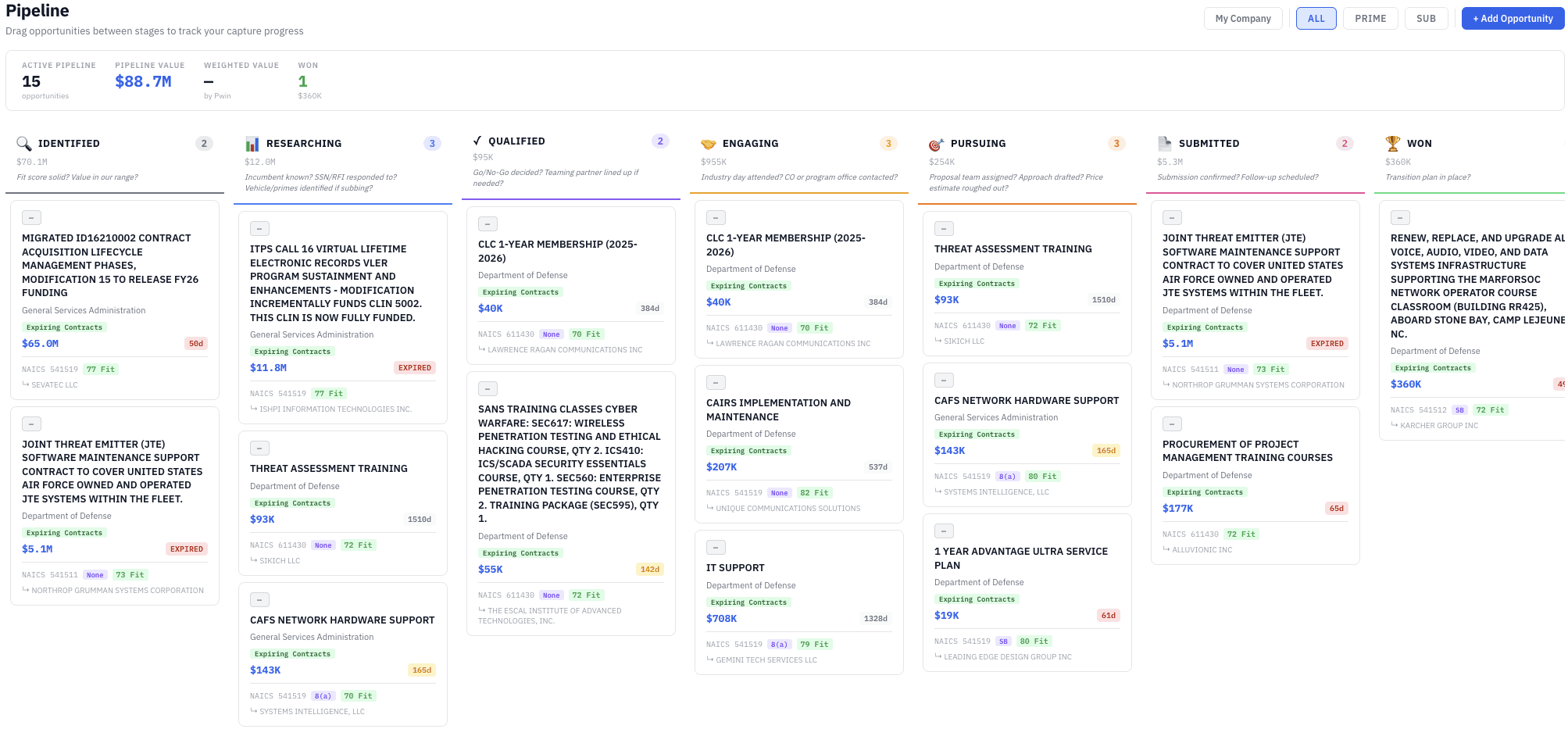
Our AI analyzes each contract against your company profile—NAICS codes, certifications, past performance, and capacity—and tells you how well you match. Instead of spending hours gathering data for a qualification decision, you get a score that helps you prioritize instantly.
High Fit Score? Dig deeper and start positioning.
Low Fit Score? Move on and save your resources for better opportunities.
The Fit Score doesn't replace judgment—but it compresses the research phase so you can focus your energy on opportunities you can actually win.
When to Check Agency Small Business Goals
Here's a qualification factor most contractors overlook: Is the agency under pressure to award to businesses like yours?
Every federal agency has small business contracting goals set by the SBA. When an agency is falling short on their 8(a), SDVOSB, HUBZone, or WOSB targets, they're actively looking for qualified small businesses to help close the gap.
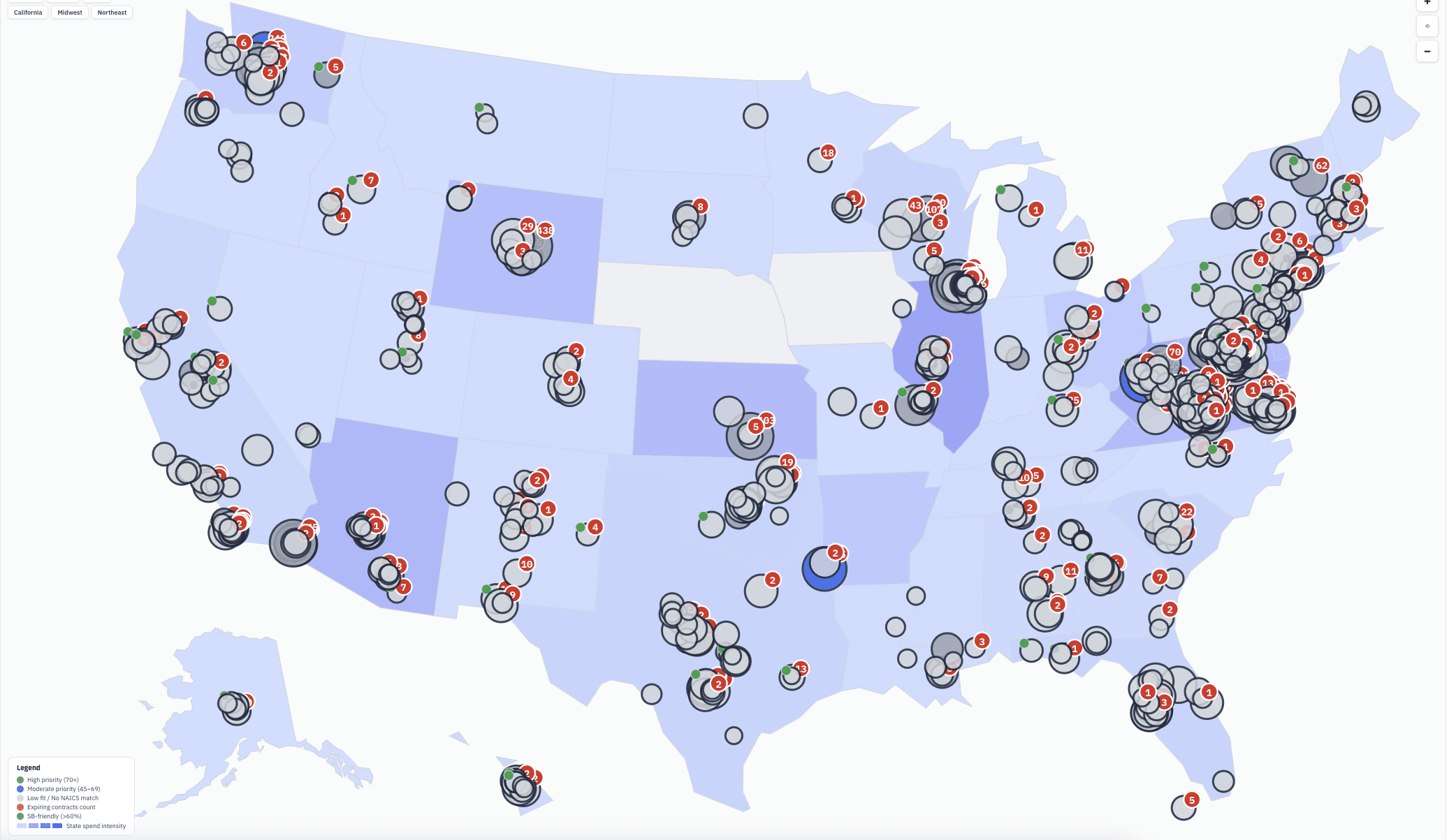
How FedProposal helps: Our agency small business performance dashboard shows how each agency is tracking against their SBA goals. If you're a HUBZone contractor and an agency is 3% behind on their HUBZone goal, that's an agency worth targeting. This data turns your certification from a checkbox into a competitive advantage.
Building a Repeatable Qualification Process
To make qualification effective, it has to be consistent. Every opportunity should go through the same evaluation—not just the ones that "feel" risky.
A simple qualification checklist:
Check Fit Score — Does this match your profile?
Review incumbent data — Who holds it? Are they entrenched?
Analyze contract history — Is spending growing, flat, or declining?
Check set-aside and agency SB goals — Is there pressure to award to your category?
Assess customer relationship — Have you engaged this agency before?
Evaluate contract fit — Size, type, vehicle, clearances?
Run the economics — Is this profitable and fundable?
Make the call — Pursue, partner, or pass?
Document your decisions. Over time, you'll see patterns in what you win and lose—and your qualification process will get sharper.
When to Say No
Walking away feels uncomfortable. But it's often the smartest decision.
A strong "no" keeps your team focused on high-value pursuits. It signals to your proposal staff that leadership respects their time. And it protects your win rate from being diluted by long-shot bids.
Remember:
Saying no doesn't close the door forever—you can pursue the next recompete
Passing now lets you focus on relationship-building for the next cycle
A disciplined "no" earns credibility with teaming partners who see you making smart decisions
What About Opportunities You Missed?
Sometimes you find an opportunity too late. The contract already recompeted, and you weren't positioned. Knowing who won helps you prepare for next time.
How FedProposal helps: Our successor contract search lets you find follow-on awards by place of performance, date, NAICS, and value. See who won when a contract you were tracking got recompeted—and use that intelligence to position for the next cycle.
Conclusion: Pursue Smarter, Win More
Qualifying opportunities before you bid isn't about being cautious—it's about being strategic. The contractors with the best win rates aren't chasing every RFP. They're focusing their limited BD resources on opportunities where they have a real shot.
FedProposal gives you the intelligence to make those decisions faster:
Fit Score to prioritize opportunities that match your profile
Incumbent analysis to understand your competition
Contract history and timelines to spot red flags and opportunities
Agency small business performance to find agencies hungry for your certifications
Successor contract search to learn from recompetes you missed
Stop burning resources on opportunities you were never going to win. Start building a pipeline based on data, not hope.
Federal contractors often get caught in the trap of bidding on everything. It's easy to think, "If we don't bid, we can't win." But chasing opportunities without qualification is one of the fastest ways to waste resources, frustrate your proposal team, and hurt your win rate.
The reality is this: successful contractors win because they choose wisely, not because they chase widely.
This guide breaks down how to evaluate opportunities before you bid—and how FedProposal's tools can help you make smarter pursuit decisions faster.
Why Qualification Matters
Every proposal comes with a cost. Even a modest response to a federal solicitation requires time, labor, and overhead. For complex bids, you may be investing hundreds of hours and tens of thousands of dollars. Without a clear qualification process, that investment is often wasted on opportunities you were never going to win.
Strong qualification does three things:
Protects your resources from being spent on unwinnable or unprofitable work
Raises your win probability by aligning your strengths with the right opportunities
Builds discipline into your growth strategy, making your pipeline more predictable
The contractors with the best win rates aren't the ones submitting the most proposals. They're the ones who've learned to say no.
The Bid/No-Bid Decision Framework
Most contractors use a decision framework to qualify opportunities before committing to a proposal. While frameworks vary, they generally include four major areas:
Customer alignment
Contract fit
Competitive position
Business economics
Let's look at each—and how to gather the intelligence you need.
1. Customer Alignment
The most important question: Do you know this customer?
Agencies award contracts to vendors they trust. Building that trust takes time. If you're showing up for the first time when the RFP drops, you're already behind.
Questions to ask:
Do you have an existing relationship with this agency or program office?
Have you met with decision-makers before the solicitation was released?
Do you understand the agency's mission, pain points, and budget priorities?
Have you performed similar work for this agency before?
If you answered "no" to most of these, your odds of winning drop significantly—especially against an incumbent who's been delivering for years.
How FedProposal helps: Our agency small business portal directory gives you direct links to 43 OSDBU offices across Defense and civilian agencies. Start building relationships now with the small business specialists who can connect you to program offices and upcoming opportunities.
2. Contract Fit
Next, assess whether the opportunity matches your capabilities.
Look for:
Scope: Does the work match your company's core expertise?
Size: Is the contract value realistic for your capacity and past performance?
Contract type: Are you comfortable with firm-fixed-price, cost-plus, or T&M?
Vehicle: Do you hold the required IDIQ, GWAC, or BPA?
Set-aside: Does your certification (8(a), SDVOSB, HUBZone, WOSB) match the requirement?
Clearances: Can you meet security requirements?
Misalignment here means higher risk and lower profitability—even if you win.
How FedProposal helps: Our expiring contracts dashboard lets you filter by set-aside type, NAICS code, and contract value so you're only looking at opportunities that fit your profile. Our contract insights surface bundled requirements, consolidation risks, and commercial procedures—red flags that might make an opportunity a poor fit.
3. Competitive Position
Winning federal contracts isn't about being the cheapest. It's about being the best positioned.
Ask yourself:
Who is the incumbent?
What are their strengths and weaknesses?
Do you have a clear differentiator—technical approach, past performance, price, or innovation?
Is the agency satisfied with the current contractor, or are there signs of dissatisfaction?
How many competitors are likely to bid?
A good rule of thumb: if you can't clearly articulate why the agency should pick you over the incumbent, you should reconsider bidding.
How FedProposal helps: Every contract in our dashboard includes incumbent analysis—who holds the work, what they've been paid, and how funding has trended over time. Our contract activity timeline shows option years, modifications, and obligation patterns. Declining spend can signal agency dissatisfaction; steady growth suggests an entrenched incumbent. This intelligence helps you decide whether there's a realistic path to winning.
4. Business Economics
Even if you can win, the numbers have to make sense. A contract that drains your resources or erodes your margins can hurt more than help.
Evaluate:
Profitability: After overhead and subcontracting, is the margin worth it?
Cash flow: Can you handle the payment cycle?
Investment: Do you have the staff and infrastructure to perform?
Strategic value: Does this open doors to follow-on work?
Sometimes a lower-margin project makes sense for positioning—but that should be a deliberate choice, not an accident.
How FedProposal helps: Our pricing history data shows what the government has paid for similar work. Use this to sanity-check your cost estimates and avoid underbidding (or overbidding) based on guesswork.
The Fit Score: Qualification in Seconds
Traditional bid/no-bid decisions require pulling data from multiple sources, building spreadsheets, and convening review meetings. It works—but it's slow.
FedProposal's Fit Score changes that.
Our AI analyzes each contract against your company profile—NAICS codes, certifications, past performance, and capacity—and tells you how well you match. Instead of spending hours gathering data for a qualification decision, you get a score that helps you prioritize instantly.
High Fit Score? Dig deeper and start positioning.
Low Fit Score? Move on and save your resources for better opportunities.
The Fit Score doesn't replace judgment—but it compresses the research phase so you can focus your energy on opportunities you can actually win.
When to Check Agency Small Business Goals
Here's a qualification factor most contractors overlook: Is the agency under pressure to award to businesses like yours?
Every federal agency has small business contracting goals set by the SBA. When an agency is falling short on their 8(a), SDVOSB, HUBZone, or WOSB targets, they're actively looking for qualified small businesses to help close the gap.
How FedProposal helps: Our agency small business performance dashboard shows how each agency is tracking against their SBA goals. If you're a HUBZone contractor and an agency is 3% behind on their HUBZone goal, that's an agency worth targeting. This data turns your certification from a checkbox into a competitive advantage.
Building a Repeatable Qualification Process
To make qualification effective, it has to be consistent. Every opportunity should go through the same evaluation—not just the ones that "feel" risky.
A simple qualification checklist:
Check Fit Score — Does this match your profile?
Review incumbent data — Who holds it? Are they entrenched?
Analyze contract history — Is spending growing, flat, or declining?
Check set-aside and agency SB goals — Is there pressure to award to your category?
Assess customer relationship — Have you engaged this agency before?
Evaluate contract fit — Size, type, vehicle, clearances?
Run the economics — Is this profitable and fundable?
Make the call — Pursue, partner, or pass?
Document your decisions. Over time, you'll see patterns in what you win and lose—and your qualification process will get sharper.
When to Say No
Walking away feels uncomfortable. But it's often the smartest decision.
A strong "no" keeps your team focused on high-value pursuits. It signals to your proposal staff that leadership respects their time. And it protects your win rate from being diluted by long-shot bids.
Remember:
Saying no doesn't close the door forever—you can pursue the next recompete
Passing now lets you focus on relationship-building for the next cycle
A disciplined "no" earns credibility with teaming partners who see you making smart decisions
What About Opportunities You Missed?
Sometimes you find an opportunity too late. The contract already recompeted, and you weren't positioned. Knowing who won helps you prepare for next time.
How FedProposal helps: Our successor contract search lets you find follow-on awards by place of performance, date, NAICS, and value. See who won when a contract you were tracking got recompeted—and use that intelligence to position for the next cycle.
Conclusion: Pursue Smarter, Win More
Qualifying opportunities before you bid isn't about being cautious—it's about being strategic. The contractors with the best win rates aren't chasing every RFP. They're focusing their limited BD resources on opportunities where they have a real shot.
FedProposal gives you the intelligence to make those decisions faster:
Fit Score to prioritize opportunities that match your profile
Incumbent analysis to understand your competition
Contract history and timelines to spot red flags and opportunities
Agency small business performance to find agencies hungry for your certifications
Successor contract search to learn from recompetes you missed
Stop burning resources on opportunities you were never going to win. Start building a pipeline based on data, not hope.