Technical
How to Make Important Connections in Order to Influence and Win
You can have the best technical solution, the most competitive pricing, and a perfectly compliant proposal—and still lose. Because federal contracting isn't just about what you know. It's about who knows you.
Government buyers are tasked with reducing risk. When they award a contract, they're putting their reputation on the line. Given the choice between a company they've never heard of and one they've met, spoken with, and seen at industry events, most will lean toward the known quantity. That's not favoritism—it's human nature.
The contractors who win consistently aren't just good at research. They're good at relationships. They show up at industry days. They connect with small business specialists. They have conversations with program managers long before the RFP drops. By the time the solicitation is released, they're not introducing themselves—they're following up.
The problem for small businesses? Relationship-building takes time. And when you're spending hours every week searching SAM.gov, digging through FPDS, and manually tracking opportunities, there's no time left for the conversations that actually move the needle.
In this post, we'll cover how to build the connections that influence federal procurement—who to target, where to find them, and how to turn a first meeting into a lasting relationship. We'll also show you how FedProposal handles the research so you can spend your time on what wins contracts: being in the room.
You can have the best technical solution, the most competitive pricing, and a perfectly compliant proposal—and still lose. Because federal contracting isn't just about what you know. It's about who knows you.
Government buyers are tasked with reducing risk. When they award a contract, they're putting their reputation on the line. Given the choice between a company they've never heard of and one they've met, spoken with, and seen at industry events, most will lean toward the known quantity. That's not favoritism—it's human nature.
The contractors who win consistently aren't just good at research. They're good at relationships. They show up at industry days. They connect with small business specialists. They have conversations with program managers long before the RFP drops. By the time the solicitation is released, they're not introducing themselves—they're following up.
The problem for small businesses? Relationship-building takes time. And when you're spending hours every week searching SAM.gov, digging through FPDS, and manually tracking opportunities, there's no time left for the conversations that actually move the needle.
In this post, we'll cover how to build the connections that influence federal procurement—who to target, where to find them, and how to turn a first meeting into a lasting relationship. We'll also show you how FedProposal handles the research so you can spend your time on what wins contracts: being in the room.


Success in the federal marketplace doesn't happen in isolation. No matter how strong your technical capabilities, how competitive your pricing, or how polished your proposal writing, you still need influence. And influence comes from relationships.
This isn't about gaming the system. It's about understanding how trust is built in a risk-averse, high-stakes environment—and positioning yourself as a known, credible, and reliable partner before the competition even starts.
Why Connections Matter in Government Contracting
Federal contracting officers and program managers are tasked with one thing above all else: reducing risk. When they award a contract, they're accountable for the outcome. A failed contract reflects on them. A successful one builds their reputation.
Given that reality, many gravitate toward companies they've seen before—vendors who've shown up consistently, come recommended by peers, or demonstrated genuine interest in solving mission challenges.
Relationships influence:
Market visibility: Buyers remember vendors who've shown up at industry days and reached out with relevant insights
Teaming opportunities: Primes want subcontractors they trust to deliver; subs want primes who will be fair and responsive
Past performance building: Connections open doors to pilot projects, set-asides, and subcontracting work that build your track record
Opportunity shaping: Access to decision-makers allows you to influence requirements before an RFP is released
In short, connections reduce perceived risk. They increase your chances of being included in competitive opportunities. And they often determine who wins when proposals are otherwise equal.
Understanding Who You Need to Connect With
Not all connections are created equal. A well-planned networking strategy targets specific stakeholders who directly influence your ability to win.
Government Buyers
These include contracting officers (COs), contracting specialists, and program managers (PMs). They're the ones making or influencing procurement decisions.
Contracting officers control the procurement process and award decisions
Program managers care about mission success and technical outcomes
Contracting specialists handle day-to-day procurement administration
Understanding their priorities—and building trust early—is essential. By the time an RFP drops, buyers have often already formed opinions about who can deliver.
Small Business Specialists
Every federal agency has an Office of Small and Disadvantaged Business Utilization (OSDBU). The small business specialists in these offices are tasked with connecting small vendors to opportunities and helping agencies meet their small business contracting goals.
These specialists can:
Point you toward upcoming opportunities
Connect you with program offices
Introduce you to primes looking for subcontractors
Advocate for small business participation in acquisitions
They're often underutilized by small contractors—and that's a mistake.
How FedProposal helps: Our small business government directory includes 43 official agency small business portals across Defense and civilian agencies. Instead of searching for the right OSDBU contact, you can go directly to the source—whether it's NAVAIR, DHS, NASA, or the Department of Energy.
Industry Partners
Other businesses—whether primes, subs, or peers in your socioeconomic category—can be just as important as government contacts. Partnerships often determine whether you get a seat at the table.
Large primes need small business subcontractors to meet their subcontracting goals
Small business peers may be willing to team on opportunities too large for either company alone
Complementary firms can help you offer a complete solution when your capabilities have gaps
The federal market is relationship-driven at every level.
End Users
Program end users—the people who actually use your product or service—can advocate internally for your company if they've seen your value firsthand. A satisfied end user who speaks up during requirements development is worth more than any capability statement.
Strategies for Building Connections That Matter
Show Up Where Buyers Are
One of the most straightforward ways to make connections is simply being present.
Attend agency-specific industry days
Join webinars hosted by procurement offices
Register for matchmaking events sponsored by APEX Accelerators
Prioritize conferences where your target agencies will actually attend
Don't spread yourself thin across generic events. Focus on the agencies you're targeting and show up consistently. Buyers notice who keeps appearing—and over time, familiarity builds trust.
How FedProposal helps: We curate free APEX Accelerator training webinars covering capture, proposals, pricing, and certifications. We also provide links to APEX on-demand recordings so you can learn on your schedule. These resources help you prepare for conversations with government buyers—and many APEX events include networking opportunities.
Leverage LinkedIn Effectively
LinkedIn is one of the most powerful networking platforms for federal contracting.
Connect with contracting officers and program managers (many are active on LinkedIn)
Share insights that demonstrate expertise—not just company promotions
Engage meaningfully with posts from agency accounts and industry peers
Research attendees before conferences so you can prepare targeted outreach
Done well, LinkedIn extends the impact of in-person connections and maintains visibility year-round. The key is adding value, not just asking for things.
Build Industry Partnerships Early
Teaming is a cornerstone of federal contracting. Smaller businesses need prime partners to access large contracts. Primes need capable subs to meet small business goals and fill capability gaps.
How to position yourself as a valuable partner:
Be specific about what you bring: past performance, niche expertise, certifications, relationships
Don't just ask for work—show what value you add to their bid
Formalize partnerships where appropriate, but also maintain informal relationships that can activate quickly
Deliver when you get the chance—reputation travels fast
A strong teaming reputation leads to repeat opportunities.
Follow Up and Stay in Touch
The biggest mistake contractors make is failing to nurture connections after an initial meeting.
Send a follow-up note within 48 hours of meeting someone
Keep them updated with relevant insights—not just company news
Check in periodically without an ask, simply to maintain rapport
Celebrate their successes and engage authentically
Influence grows through repeated, value-added interactions. The contractor who follows up consistently beats the one who had a great first meeting and disappeared.
Turning Connections Into Influence
Connections are the starting point. Influence is what turns relationships into wins.
Influence comes from a combination of credibility, visibility, and alignment with mission priorities.
Establish Credibility
You need to show—not just tell—that you can deliver.
Share case studies and past performance examples when appropriate
Publish thought leadership content in your area of expertise
Be specific about what you do and avoid vague marketing language
Deliver on every commitment, no matter how small
When people believe you can deliver, they're more likely to advocate for you.
Be Visible at the Right Time
Visibility isn't about being everywhere. It's about being present when decisions are being shaped.
Monitor agency forecasts for upcoming requirements
Track sources sought notices and respond thoughtfully
Reach out before RFPs drop to discuss potential solutions
Attend pre-solicitation conferences and industry days
The contractors who show up early get to influence requirements. The ones who show up late are responding to requirements shaped by someone else.
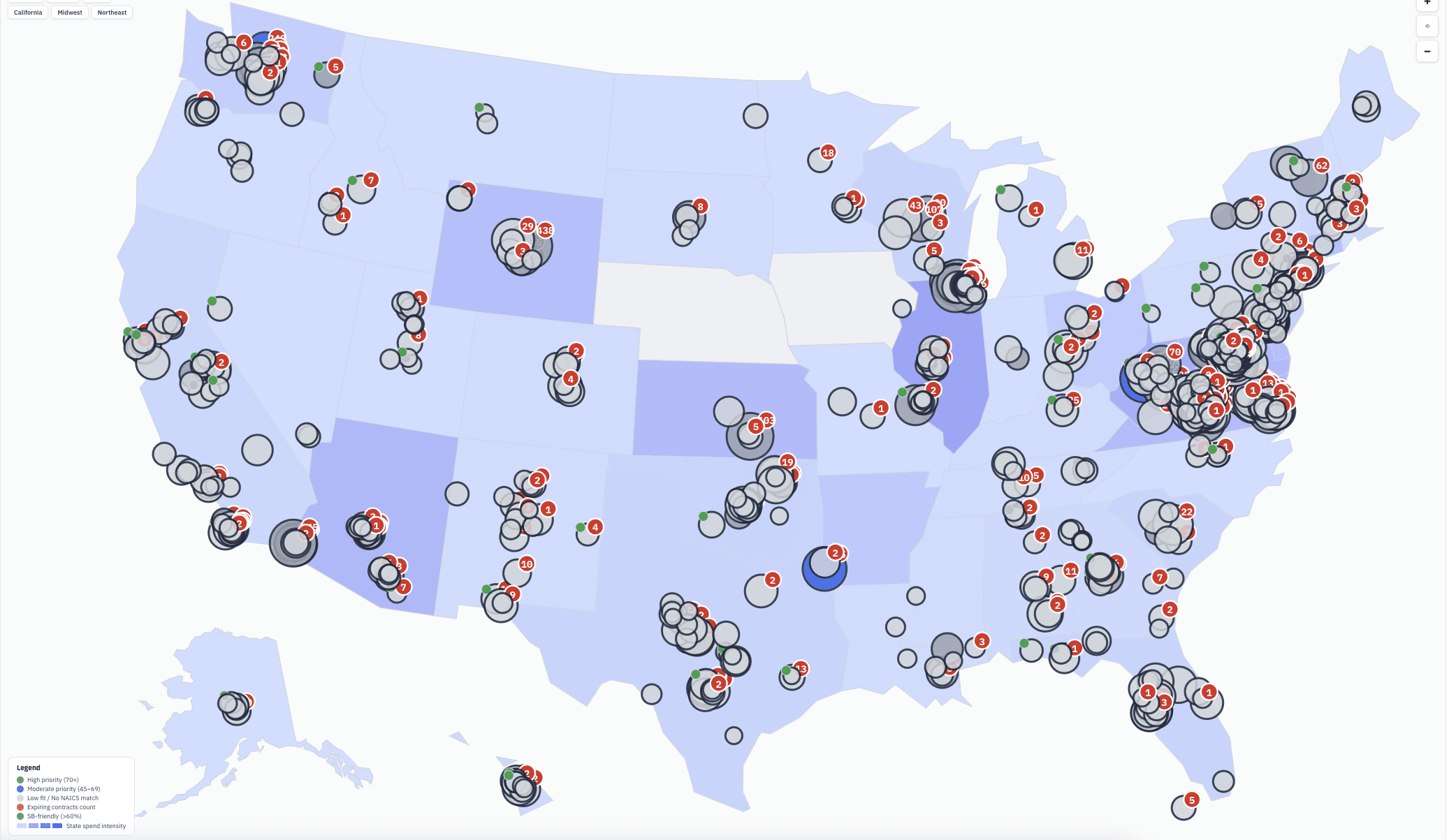
How FedProposal helps: Our forecast search pulls planned acquisitions from 27 federal agencies so you can see what's coming. Our expiring contracts dashboard shows you recompetes 12–18 months out. When you know what's coming early, you can time your outreach to arrive before the competition.
Align With Mission Priorities
Nothing creates influence faster than demonstrating that you understand an agency's mission.
Use publicly available documents—strategic plans, budget justifications, congressional testimony—to understand priorities
Frame your solution in terms of mission outcomes, not just features
Position yourself as a partner who shares the agency's goals, not just a vendor selling services
Government buyers want to work with contractors who get it. Understanding their mission—and speaking their language—sets you apart.
Making Time for Relationships
Here's the uncomfortable truth: most small business BD teams know they should be building relationships. They just don't have time.
When you're spending hours every week:
Refreshing SAM.gov and clicking through vague alerts
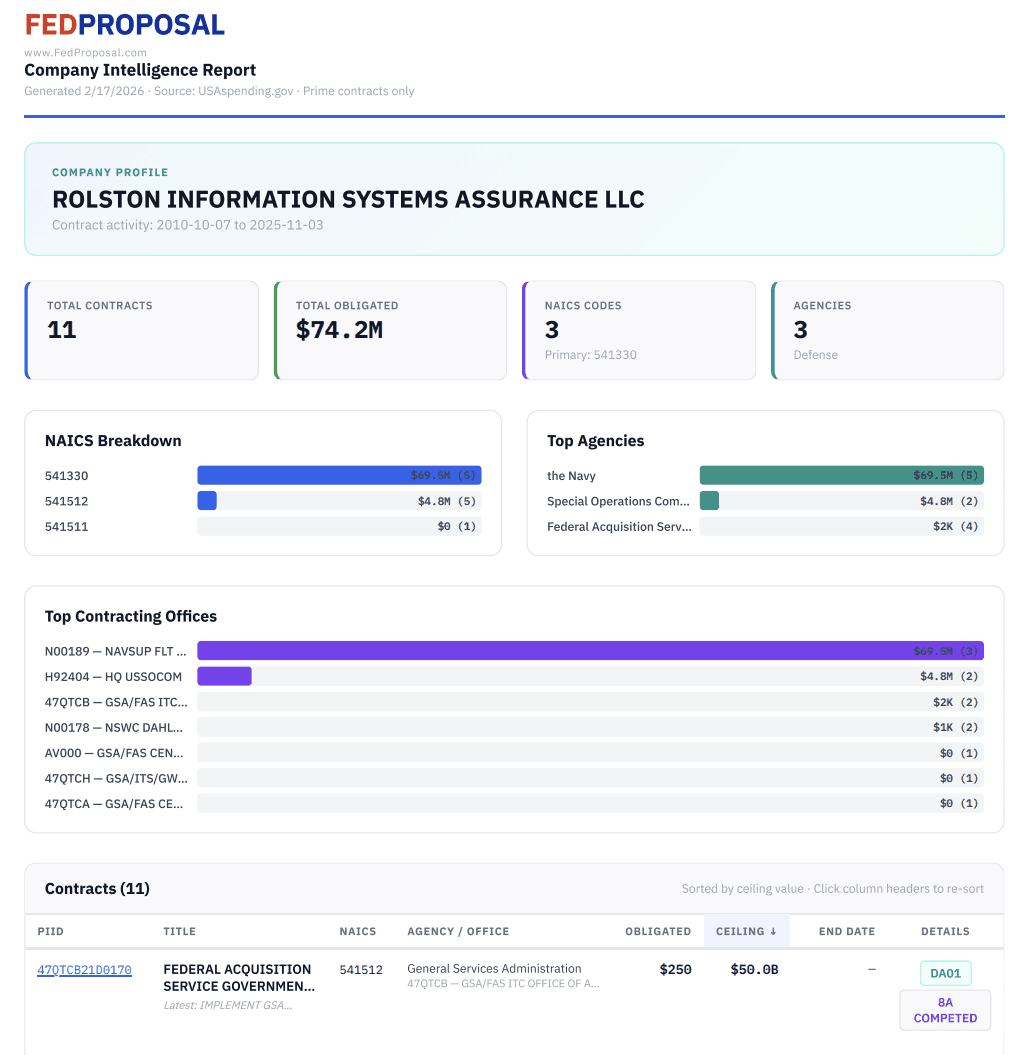
Digging through FPDS to find incumbent information
Cross-referencing USAspending data to understand pricing history
Manually tracking forecasts across dozens of agency websites
...there's nothing left for the conversations that actually win contracts.
The research matters. But it's a means to an end—not the end itself. The goal is to walk into a meeting informed, not to spend all your time gathering information.
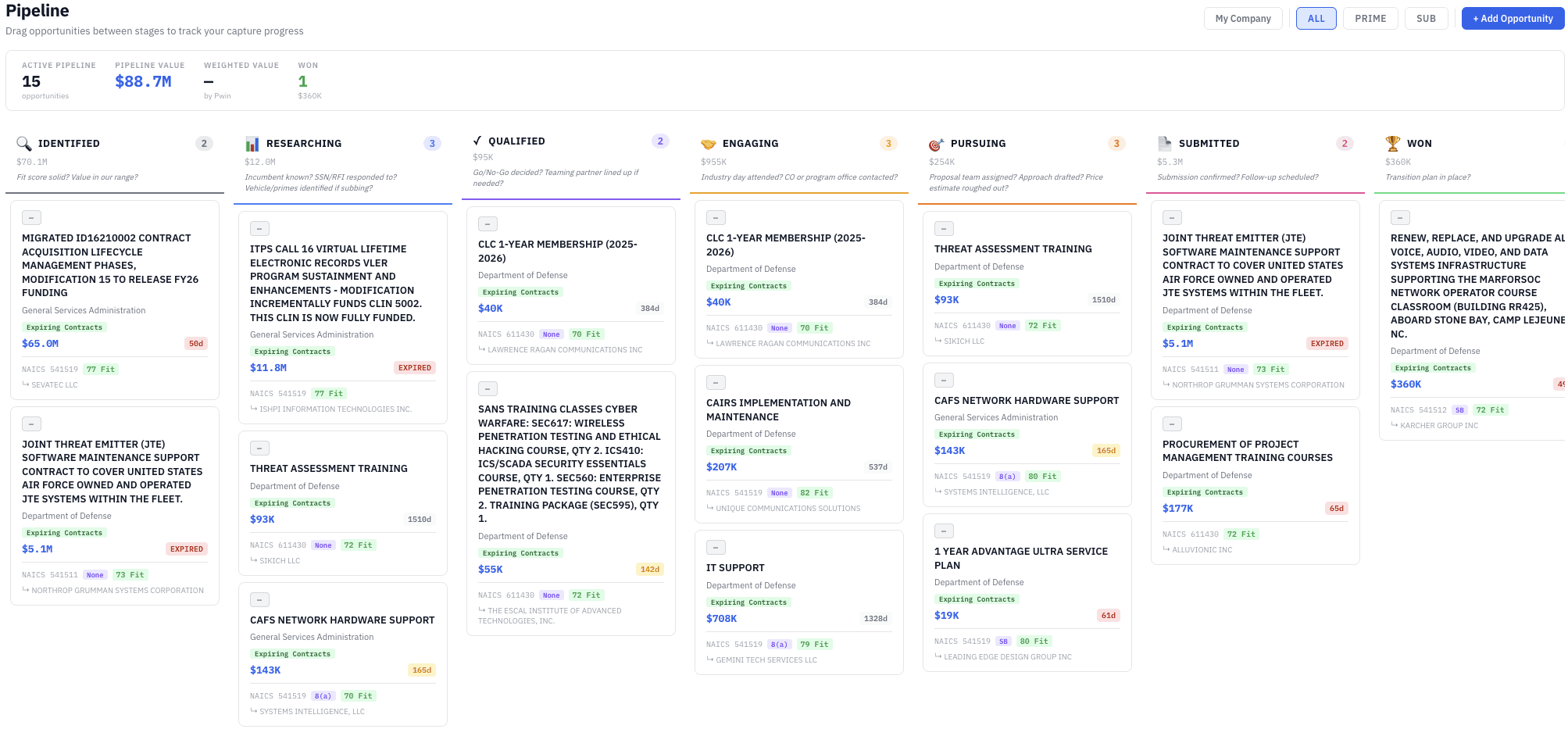
How FedProposal helps: We automate the research. Daily SAM alerts with real details—not vague links. Forecast search across 27 agencies. Expiring contracts with incumbent data and pricing history. Fit Scores that tell you which opportunities are worth pursuing.
When the data gathering takes minutes instead of hours, you have time to pick up the phone, attend the industry day, and send the follow-up email. That's where contracts are won.
A Practical Networking Approach
To stay focused, consider mapping out who you need to connect with and why.
Stakeholder | Goal | Actions | Frequency |
|---|---|---|---|
Contracting Officer | Build trust, understand process | Attend industry days, connect on LinkedIn | Quarterly |
Program Manager | Shape requirements | Share relevant solutions, request capability briefings | Bi-monthly |
Small Business Specialist | Gain visibility, get introductions | Attend OSDBU events, send capability statements | Quarterly |
Prime Contractor | Explore teaming | Reach out with specific capabilities, attend matchmaking | Monthly |
End Users | Demonstrate value | Deliver excellent work, gather testimonials | Ongoing |
This structured approach ensures you're building influence across different stakeholder types—not just chasing whoever responds first.
Common Mistakes to Avoid
Treating networking as transactional: People spot insincerity quickly. Build relationships, not just contact lists.
Relying on one channel: Attending events but never following up—or only using LinkedIn without in-person presence—limits your reach.
Talking only about yourself: The best networkers listen more than they talk. Understand what others need before pitching what you offer.
Expecting fast results: Influence is built over months and years, not days. Play the long game.
Neglecting existing relationships: It's easier to deepen a relationship than start a new one. Don't ignore contacts you already have.
Sustaining Long-Term Influence
Winning one contract is great. Sustainable success requires ongoing relationship investment.
Treat every contract like a stepping stone to deeper trust
Deliver flawlessly—performance is the ultimate relationship builder
Invest in your reputation; word travels fast in federal circles
Continue expanding your network even when you're busy delivering
Stay visible between contracts so you're top of mind for the next opportunity
Think of networking not as separate from delivery, but as part of the same cycle. The relationships you build while performing create the opportunities you'll pursue next.
Conclusion: Relationships Win Contracts
Making important connections in federal contracting is both an art and a science. It requires intentionality, patience, and authenticity. The contractors who win consistently don't just chase opportunities—they cultivate relationships that put them in position to win before the competition starts.
The formula isn't complicated:
Show up where buyers are
Build partnerships that add mutual value
Nurture connections over time
Align your capabilities with agency missions
Be visible when decisions are being shaped
But executing that formula requires time. And time is exactly what most small BD teams don't have—because they're buried in manual research.
FedProposal handles the research: daily SAM alerts, forecast search, expiring contracts, incumbent analysis, Fit Scores. We give you hours back every week—hours you can spend building the relationships that actually win contracts.
Because in federal contracting, what you know matters. But who knows you matters more.
Success in the federal marketplace doesn't happen in isolation. No matter how strong your technical capabilities, how competitive your pricing, or how polished your proposal writing, you still need influence. And influence comes from relationships.
This isn't about gaming the system. It's about understanding how trust is built in a risk-averse, high-stakes environment—and positioning yourself as a known, credible, and reliable partner before the competition even starts.
Why Connections Matter in Government Contracting
Federal contracting officers and program managers are tasked with one thing above all else: reducing risk. When they award a contract, they're accountable for the outcome. A failed contract reflects on them. A successful one builds their reputation.
Given that reality, many gravitate toward companies they've seen before—vendors who've shown up consistently, come recommended by peers, or demonstrated genuine interest in solving mission challenges.
Relationships influence:
Market visibility: Buyers remember vendors who've shown up at industry days and reached out with relevant insights
Teaming opportunities: Primes want subcontractors they trust to deliver; subs want primes who will be fair and responsive
Past performance building: Connections open doors to pilot projects, set-asides, and subcontracting work that build your track record
Opportunity shaping: Access to decision-makers allows you to influence requirements before an RFP is released
In short, connections reduce perceived risk. They increase your chances of being included in competitive opportunities. And they often determine who wins when proposals are otherwise equal.
Understanding Who You Need to Connect With
Not all connections are created equal. A well-planned networking strategy targets specific stakeholders who directly influence your ability to win.
Government Buyers
These include contracting officers (COs), contracting specialists, and program managers (PMs). They're the ones making or influencing procurement decisions.
Contracting officers control the procurement process and award decisions
Program managers care about mission success and technical outcomes
Contracting specialists handle day-to-day procurement administration
Understanding their priorities—and building trust early—is essential. By the time an RFP drops, buyers have often already formed opinions about who can deliver.
Small Business Specialists
Every federal agency has an Office of Small and Disadvantaged Business Utilization (OSDBU). The small business specialists in these offices are tasked with connecting small vendors to opportunities and helping agencies meet their small business contracting goals.
These specialists can:
Point you toward upcoming opportunities
Connect you with program offices
Introduce you to primes looking for subcontractors
Advocate for small business participation in acquisitions
They're often underutilized by small contractors—and that's a mistake.
How FedProposal helps: Our small business government directory includes 43 official agency small business portals across Defense and civilian agencies. Instead of searching for the right OSDBU contact, you can go directly to the source—whether it's NAVAIR, DHS, NASA, or the Department of Energy.
Industry Partners
Other businesses—whether primes, subs, or peers in your socioeconomic category—can be just as important as government contacts. Partnerships often determine whether you get a seat at the table.
Large primes need small business subcontractors to meet their subcontracting goals
Small business peers may be willing to team on opportunities too large for either company alone
Complementary firms can help you offer a complete solution when your capabilities have gaps
The federal market is relationship-driven at every level.
End Users
Program end users—the people who actually use your product or service—can advocate internally for your company if they've seen your value firsthand. A satisfied end user who speaks up during requirements development is worth more than any capability statement.
Strategies for Building Connections That Matter
Show Up Where Buyers Are
One of the most straightforward ways to make connections is simply being present.
Attend agency-specific industry days
Join webinars hosted by procurement offices
Register for matchmaking events sponsored by APEX Accelerators
Prioritize conferences where your target agencies will actually attend
Don't spread yourself thin across generic events. Focus on the agencies you're targeting and show up consistently. Buyers notice who keeps appearing—and over time, familiarity builds trust.
How FedProposal helps: We curate free APEX Accelerator training webinars covering capture, proposals, pricing, and certifications. We also provide links to APEX on-demand recordings so you can learn on your schedule. These resources help you prepare for conversations with government buyers—and many APEX events include networking opportunities.
Leverage LinkedIn Effectively
LinkedIn is one of the most powerful networking platforms for federal contracting.
Connect with contracting officers and program managers (many are active on LinkedIn)
Share insights that demonstrate expertise—not just company promotions
Engage meaningfully with posts from agency accounts and industry peers
Research attendees before conferences so you can prepare targeted outreach
Done well, LinkedIn extends the impact of in-person connections and maintains visibility year-round. The key is adding value, not just asking for things.
Build Industry Partnerships Early
Teaming is a cornerstone of federal contracting. Smaller businesses need prime partners to access large contracts. Primes need capable subs to meet small business goals and fill capability gaps.
How to position yourself as a valuable partner:
Be specific about what you bring: past performance, niche expertise, certifications, relationships
Don't just ask for work—show what value you add to their bid
Formalize partnerships where appropriate, but also maintain informal relationships that can activate quickly
Deliver when you get the chance—reputation travels fast
A strong teaming reputation leads to repeat opportunities.
Follow Up and Stay in Touch
The biggest mistake contractors make is failing to nurture connections after an initial meeting.
Send a follow-up note within 48 hours of meeting someone
Keep them updated with relevant insights—not just company news
Check in periodically without an ask, simply to maintain rapport
Celebrate their successes and engage authentically
Influence grows through repeated, value-added interactions. The contractor who follows up consistently beats the one who had a great first meeting and disappeared.
Turning Connections Into Influence
Connections are the starting point. Influence is what turns relationships into wins.
Influence comes from a combination of credibility, visibility, and alignment with mission priorities.
Establish Credibility
You need to show—not just tell—that you can deliver.
Share case studies and past performance examples when appropriate
Publish thought leadership content in your area of expertise
Be specific about what you do and avoid vague marketing language
Deliver on every commitment, no matter how small
When people believe you can deliver, they're more likely to advocate for you.
Be Visible at the Right Time
Visibility isn't about being everywhere. It's about being present when decisions are being shaped.
Monitor agency forecasts for upcoming requirements
Track sources sought notices and respond thoughtfully
Reach out before RFPs drop to discuss potential solutions
Attend pre-solicitation conferences and industry days
The contractors who show up early get to influence requirements. The ones who show up late are responding to requirements shaped by someone else.
How FedProposal helps: Our forecast search pulls planned acquisitions from 27 federal agencies so you can see what's coming. Our expiring contracts dashboard shows you recompetes 12–18 months out. When you know what's coming early, you can time your outreach to arrive before the competition.
Align With Mission Priorities
Nothing creates influence faster than demonstrating that you understand an agency's mission.
Use publicly available documents—strategic plans, budget justifications, congressional testimony—to understand priorities
Frame your solution in terms of mission outcomes, not just features
Position yourself as a partner who shares the agency's goals, not just a vendor selling services
Government buyers want to work with contractors who get it. Understanding their mission—and speaking their language—sets you apart.
Making Time for Relationships
Here's the uncomfortable truth: most small business BD teams know they should be building relationships. They just don't have time.
When you're spending hours every week:
Refreshing SAM.gov and clicking through vague alerts
Digging through FPDS to find incumbent information
Cross-referencing USAspending data to understand pricing history
Manually tracking forecasts across dozens of agency websites
...there's nothing left for the conversations that actually win contracts.
The research matters. But it's a means to an end—not the end itself. The goal is to walk into a meeting informed, not to spend all your time gathering information.
How FedProposal helps: We automate the research. Daily SAM alerts with real details—not vague links. Forecast search across 27 agencies. Expiring contracts with incumbent data and pricing history. Fit Scores that tell you which opportunities are worth pursuing.
When the data gathering takes minutes instead of hours, you have time to pick up the phone, attend the industry day, and send the follow-up email. That's where contracts are won.
A Practical Networking Approach
To stay focused, consider mapping out who you need to connect with and why.
Stakeholder | Goal | Actions | Frequency |
|---|---|---|---|
Contracting Officer | Build trust, understand process | Attend industry days, connect on LinkedIn | Quarterly |
Program Manager | Shape requirements | Share relevant solutions, request capability briefings | Bi-monthly |
Small Business Specialist | Gain visibility, get introductions | Attend OSDBU events, send capability statements | Quarterly |
Prime Contractor | Explore teaming | Reach out with specific capabilities, attend matchmaking | Monthly |
End Users | Demonstrate value | Deliver excellent work, gather testimonials | Ongoing |
This structured approach ensures you're building influence across different stakeholder types—not just chasing whoever responds first.
Common Mistakes to Avoid
Treating networking as transactional: People spot insincerity quickly. Build relationships, not just contact lists.
Relying on one channel: Attending events but never following up—or only using LinkedIn without in-person presence—limits your reach.
Talking only about yourself: The best networkers listen more than they talk. Understand what others need before pitching what you offer.
Expecting fast results: Influence is built over months and years, not days. Play the long game.
Neglecting existing relationships: It's easier to deepen a relationship than start a new one. Don't ignore contacts you already have.
Sustaining Long-Term Influence
Winning one contract is great. Sustainable success requires ongoing relationship investment.
Treat every contract like a stepping stone to deeper trust
Deliver flawlessly—performance is the ultimate relationship builder
Invest in your reputation; word travels fast in federal circles
Continue expanding your network even when you're busy delivering
Stay visible between contracts so you're top of mind for the next opportunity
Think of networking not as separate from delivery, but as part of the same cycle. The relationships you build while performing create the opportunities you'll pursue next.
Conclusion: Relationships Win Contracts
Making important connections in federal contracting is both an art and a science. It requires intentionality, patience, and authenticity. The contractors who win consistently don't just chase opportunities—they cultivate relationships that put them in position to win before the competition starts.
The formula isn't complicated:
Show up where buyers are
Build partnerships that add mutual value
Nurture connections over time
Align your capabilities with agency missions
Be visible when decisions are being shaped
But executing that formula requires time. And time is exactly what most small BD teams don't have—because they're buried in manual research.
FedProposal handles the research: daily SAM alerts, forecast search, expiring contracts, incumbent analysis, Fit Scores. We give you hours back every week—hours you can spend building the relationships that actually win contracts.
Because in federal contracting, what you know matters. But who knows you matters more.